

News
News
Published on 15/06/2026
Virgen del Rocío University Hospital and FISEVI organise the first research and innovation conference
Share on:
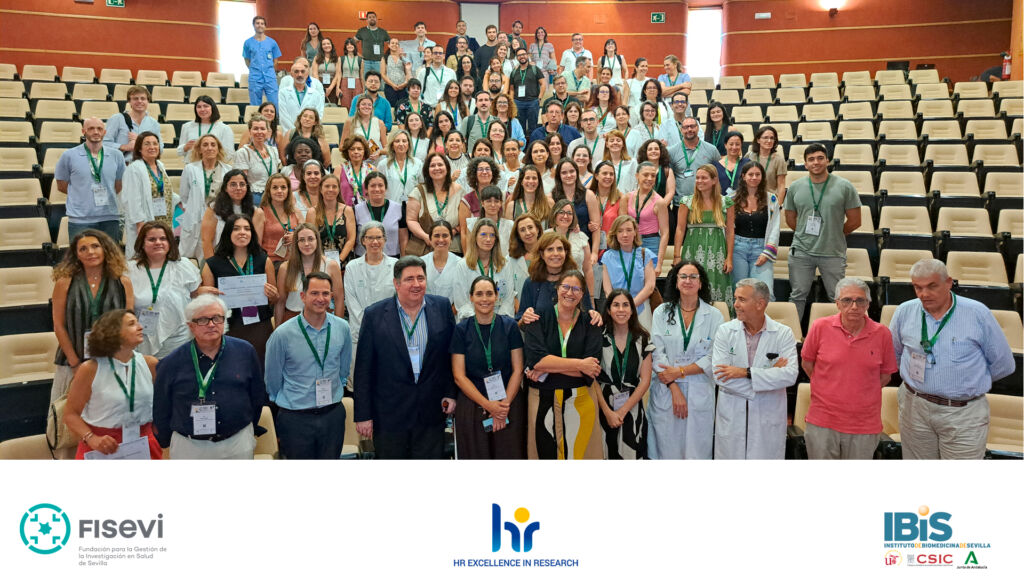
The first Research and Innovation Conference of Virgen del Rocío University Hospital (HUVR), organised by the hospital together with the Foundation for the Management of Health Research in Seville (FISEVI), concluded last Thursday after two days of intensive scientific activity during which more than one hundred professionals shared knowledge, experiences and projects aimed at strengthening biomedical research and healthcare innovation.
The initiative, designed to promote clinical and translational research, encourage innovation in healthcare and enhance the transfer of scientific knowledge into clinical practice, was launched with the aim of consolidating a strong research culture within the hospital and facilitating the translation of scientific advances into day-to-day patient care.
The opening ceremony was attended by Aurea Morillo García, Secretary General for Research, Innovation and Digital Health at the Regional Ministry of Health, Presidency and Emergencies of the Regional Government of Andalusia; Nieves Romero Rodríguez, Chief Executive Officer of Virgen del Rocío University Hospital; Rafael Fernández Chacón, Director of the Institute of Biomedicine of Seville (IBiS); Manuel E. Dorado Ocaña, Dean of the Faculty of Medicine at the University of Seville; and Gabriel Domínguez Maldonado, Dean of the Faculty of Nursing, Physiotherapy and Podiatry at the University of Seville.
The event was followed by the keynote lecture delivered by Damián García Olmo, Professor of Surgery at the Autonomous University of Madrid, who addressed the role of translational research in surgical practice in a presentation entitled “La ciencia que nos guía”.
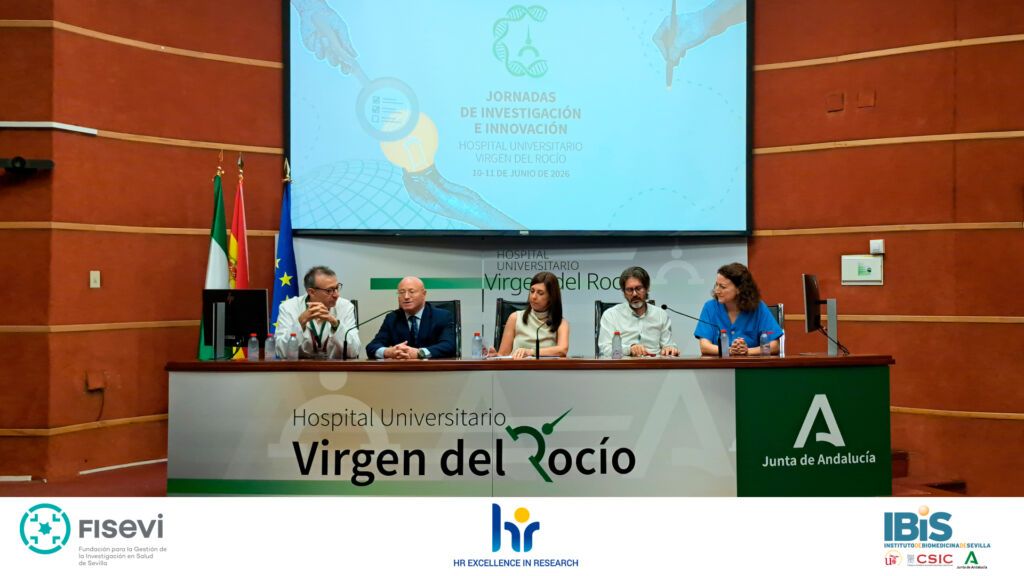
In the photograph, from left to right: Rafael Fernández Chacón, Manuel E. Dorado Ocaña, Aurea Morillo García, Gabriel Domínguez Maldonado and Nieves Romero Rodríguez.
Throughout the conference, several thematic panel sessions were held focusing on some of the most pressing challenges currently facing health research.
Particular attention was given to the discussion on how to build high-impact research through strategic planning, funding opportunities and collaborative partnerships, with contributions from representatives of the Regional Ministry of Health, Presidency and Emergencies of the Regional Government of Andalusia, the Institute of Biomedicine of Seville (IBiS) and the University of Seville.
The application of emerging technologies and health data management was also addressed, with presentations showcasing projects on digital innovation in obstetrics, the use of 3D models in medicine, the application of advanced predictive models for migraine prevention, and the optimisation of emergency department patient flow through intelligent decision-support tools.
The final panel, dedicated to translational research and precision medicine, featured pioneering initiatives in CAR-T cell therapies, clinical advances in rare diseases through the therapeutic use of nucleosides in TK2 deficiency myopathies, treatment optimisation through tailored antibiotic-duration strategies for infections caused by Pseudomonas spp., and preclinical evidence relating to treatment-resistant schizophrenia, including the development of the CIOZAID clinical trial.
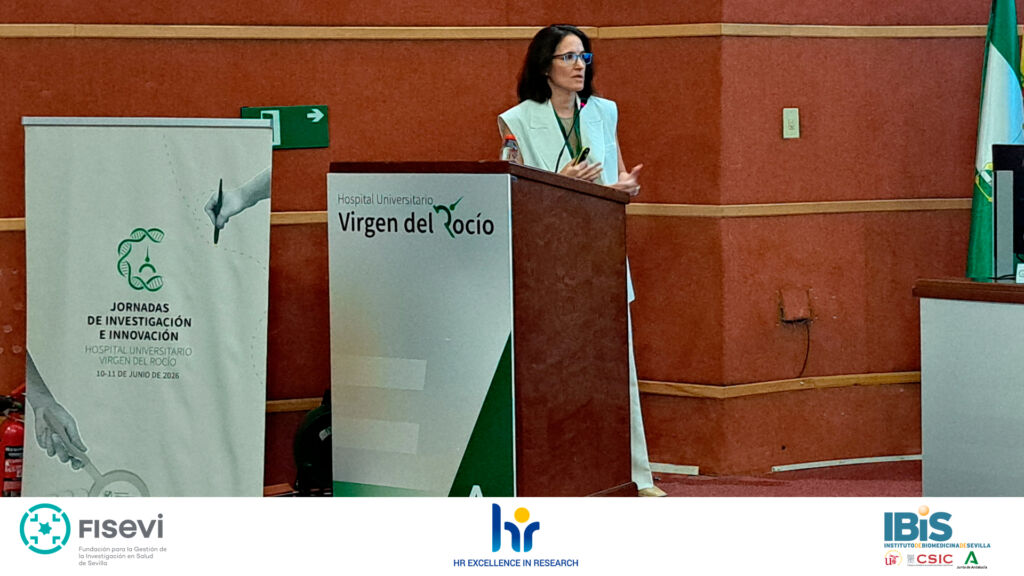
Sandra Leal, Head of Management and Support Services at Virgen del Rocío University Hospital
Attendees also had the opportunity to take part in practical workshops on research project design, the use of artificial intelligence tools for researchers, the protection of innovative outcomes and intellectual property, and the use of clinical data in research.
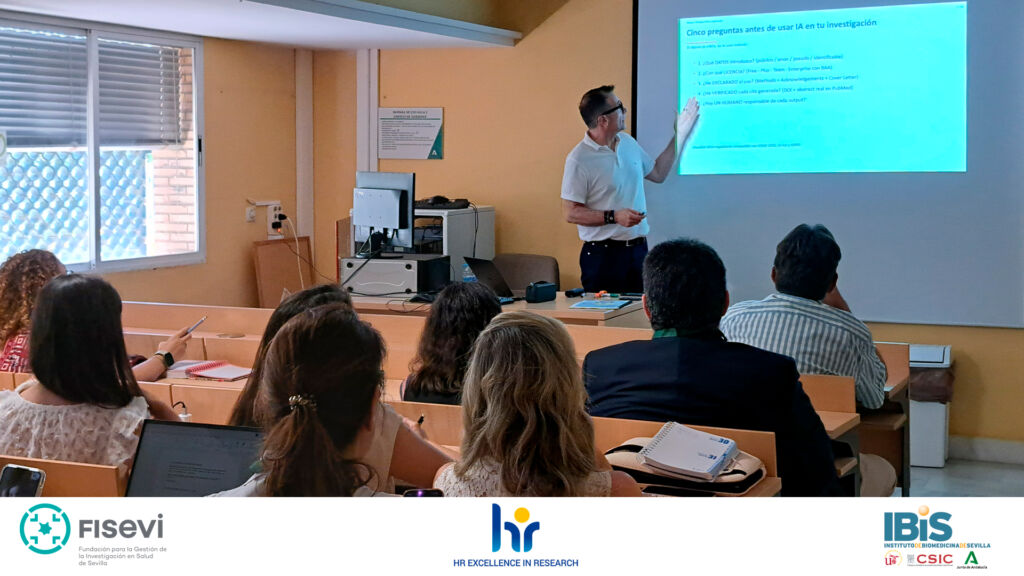
Jesús Herrera, Expert in Innovation and Digital Transformation
Alongside the scientific sessions, the conference also provided a platform for poster presentations, oral communications and the “Three-Minute Idea” video format. This latter initiative was designed to showcase innovative proposals developed by healthcare professionals in a concise and accessible format, with attendees voting for the best presentation among the 16 submissions received.
The conference concluded with the presentation of awards for Best Oral Communication and Best Three-Minute Idea. The awards ceremony was led by members of the organising committee: María Elisa Cordero, Medical Director of HUVR; Rocío Salguero, Director of Nursing at HUVR; Laura Muñoz, Neurologist; José Cañón; and María Coronel, Coordinator of FISEVI’s Project Management Unit, together with Enrique Calderón Sandubete, Director of the Secretariat for Relations with Healthcare Institutions at the University of Seville.
The award recipients were:
-Best Oral Communications: Elena Zapata Arriaza (“Seguridad y eficacia de tirofibán a dosis bajas en el ictus isquémico agudo por lesión en tándem sometido a trombectomía mecánica (ENSAYO ATILA): Ensayo Clínico Aleatorizado y Multicéntrico”), Inmaculada Alonso Araujo (“Estrategia Integral de Cuidados para el Control de un Brote de Infección Nososcomial: Experiencia y Resultados”), Lucia Ceballos Romero (“Desarrollo de un ensayo CRISPR-Cas13a para la detección de cepas de Pseudomonas aeruginosa productoras de ExoU en muestras de sangre”) y Santiago Fernández-Gordón Sánchez (“Cribado ecocardiográfico multicéntrico de amiloidosis cardíaca en la hipertrofia ventricular izquierda: rendimiento diagnóstico de la puntuación IWT en la práctica clínica habitual”).
-Best Three-Minute Idea Presentation: Elvira Arroyo García (“Papel de la disfunción MAM en el contexto de la ELA”), Jorge Navarro Roldán (“Optimización del Proceso Post-Analítico: Herramienta de Apoyo para Informes Farcogenéticos“), Marco Mauricio Matute Núñez (“Explorador de Ideas de Investigación con IA generativa”) y María Teresa Sánchez Jiménez (“Fototerapia domiciliaria neonatal”).
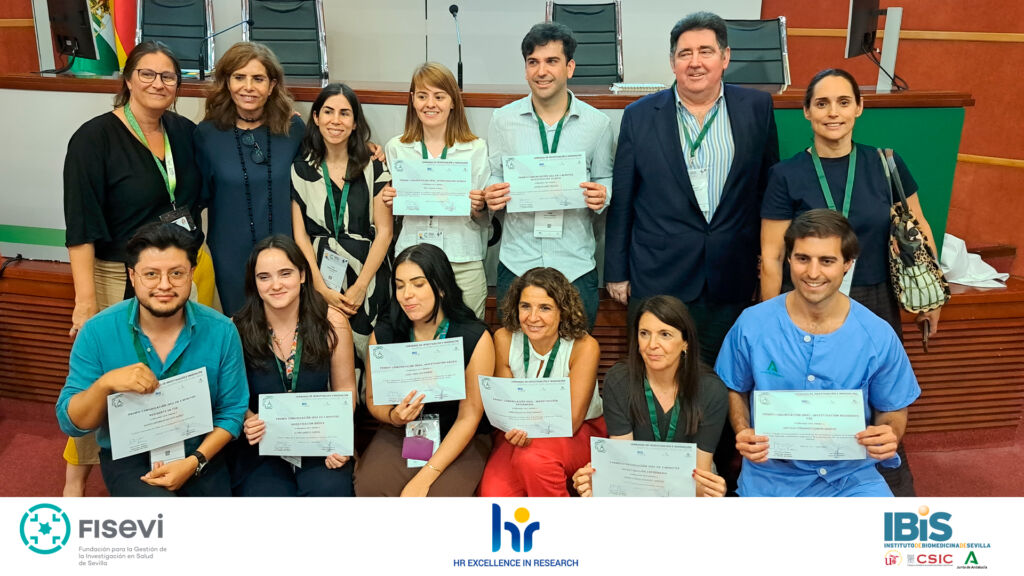
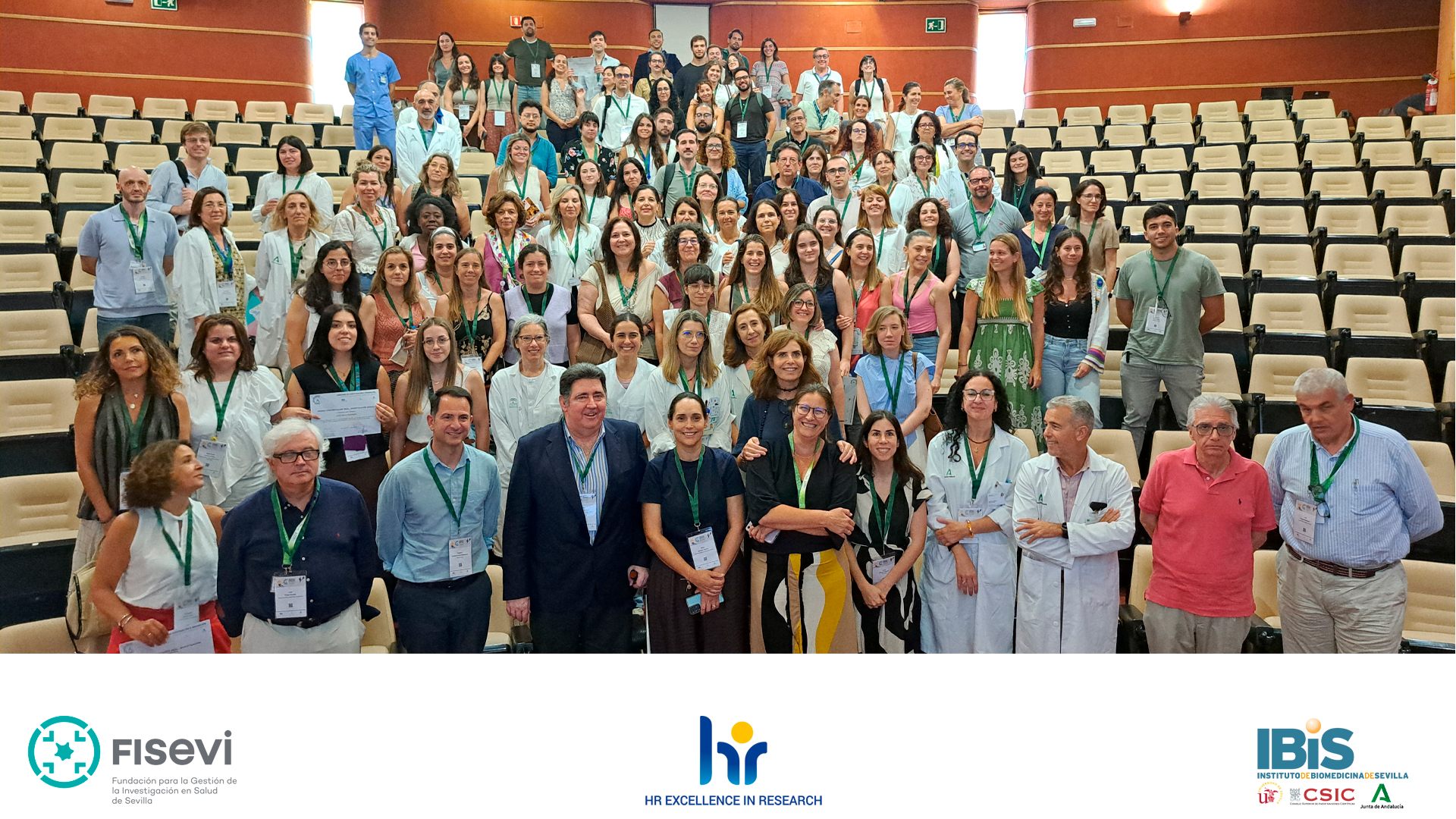
The organising committee of the conference together with the award winners
This conference have represented a key and much-needed meeting point between Virgen del Rocío University Hospital and FISEVI, reinforcing both institutions’ commitment to research, innovation and multidisciplinary collaboration as essential pillars for advancing towards more efficient, personalised healthcare based on scientific evidence.
Virgen del Rocío University Hospital and FISEVI organise the first research and innovation conference
The first Research and Innovation Conference of Virgen del Rocío University Hospital (HUVR), organised by the hospital together with the Foundation for the Management of Health Research in Seville (FISEVI), concluded last Thursday after two days of intensive scientific activity during which more than one hundred professionals shared knowledge, experiences and projects aimed at strengthening biomedical research and healthcare innovation.
The initiative, designed to promote clinical and translational research, encourage innovation in healthcare and enhance the transfer of scientific knowledge into clinical practice, was launched with the aim of consolidating a strong research culture within the hospital and facilitating the translation of scientific advances into day-to-day patient care.
The opening ceremony was attended by Aurea Morillo García, Secretary General for Research, Innovation and Digital Health at the Regional Ministry of Health, Presidency and Emergencies of the Regional Government of Andalusia; Nieves Romero Rodríguez, Chief Executive Officer of Virgen del Rocío University Hospital; Rafael Fernández Chacón, Director of the Institute of Biomedicine of Seville (IBiS); Manuel E. Dorado Ocaña, Dean of the Faculty of Medicine at the University of Seville; and Gabriel Domínguez Maldonado, Dean of the Faculty of Nursing, Physiotherapy and Podiatry at the University of Seville.
The event was followed by the keynote lecture delivered by Damián García Olmo, Professor of Surgery at the Autonomous University of Madrid, who addressed the role of translational research in surgical practice in a presentation entitled “La ciencia que nos guía”.
In the photograph, from left to right: Rafael Fernández Chacón, Manuel E. Dorado Ocaña, Aurea Morillo García, Gabriel Domínguez Maldonado and Nieves Romero Rodríguez.
Throughout the conference, several thematic panel sessions were held focusing on some of the most pressing challenges currently facing health research.
Particular attention was given to the discussion on how to build high-impact research through strategic planning, funding opportunities and collaborative partnerships, with contributions from representatives of the Regional Ministry of Health, Presidency and Emergencies of the Regional Government of Andalusia, the Institute of Biomedicine of Seville (IBiS) and the University of Seville.
The application of emerging technologies and health data management was also addressed, with presentations showcasing projects on digital innovation in obstetrics, the use of 3D models in medicine, the application of advanced predictive models for migraine prevention, and the optimisation of emergency department patient flow through intelligent decision-support tools.
The final panel, dedicated to translational research and precision medicine, featured pioneering initiatives in CAR-T cell therapies, clinical advances in rare diseases through the therapeutic use of nucleosides in TK2 deficiency myopathies, treatment optimisation through tailored antibiotic-duration strategies for infections caused by Pseudomonas spp., and preclinical evidence relating to treatment-resistant schizophrenia, including the development of the CIOZAID clinical trial.
Sandra Leal, Head of Management and Support Services at Virgen del Rocío University Hospital
Attendees also had the opportunity to take part in practical workshops on research project design, the use of artificial intelligence tools for researchers, the protection of innovative outcomes and intellectual property, and the use of clinical data in research.
Jesús Herrera, Expert in Innovation and Digital Transformation
Alongside the scientific sessions, the conference also provided a platform for poster presentations, oral communications and the “Three-Minute Idea” video format. This latter initiative was designed to showcase innovative proposals developed by healthcare professionals in a concise and accessible format, with attendees voting for the best presentation among the 16 submissions received.
The conference concluded with the presentation of awards for Best Oral Communication and Best Three-Minute Idea. The awards ceremony was led by members of the organising committee: María Elisa Cordero, Medical Director of HUVR; Rocío Salguero, Director of Nursing at HUVR; Laura Muñoz, Neurologist; José Cañón; and María Coronel, Coordinator of FISEVI’s Project Management Unit, together with Enrique Calderón Sandubete, Director of the Secretariat for Relations with Healthcare Institutions at the University of Seville.
The award recipients were:
-Best Oral Communications: Elena Zapata Arriaza (“Seguridad y eficacia de tirofibán a dosis bajas en el ictus isquémico agudo por lesión en tándem sometido a trombectomía mecánica (ENSAYO ATILA): Ensayo Clínico Aleatorizado y Multicéntrico”), Inmaculada Alonso Araujo (“Estrategia Integral de Cuidados para el Control de un Brote de Infección Nososcomial: Experiencia y Resultados”), Lucia Ceballos Romero (“Desarrollo de un ensayo CRISPR-Cas13a para la detección de cepas de Pseudomonas aeruginosa productoras de ExoU en muestras de sangre”) y Santiago Fernández-Gordón Sánchez (“Cribado ecocardiográfico multicéntrico de amiloidosis cardíaca en la hipertrofia ventricular izquierda: rendimiento diagnóstico de la puntuación IWT en la práctica clínica habitual”).
-Best Three-Minute Idea Presentation: Elvira Arroyo García (“Papel de la disfunción MAM en el contexto de la ELA”), Jorge Navarro Roldán (“Optimización del Proceso Post-Analítico: Herramienta de Apoyo para Informes Farcogenéticos“), Marco Mauricio Matute Núñez (“Explorador de Ideas de Investigación con IA generativa”) y María Teresa Sánchez Jiménez (“Fototerapia domiciliaria neonatal”).
The organising committee of the conference together with the award winners
This conference have represented a key and much-needed meeting point between Virgen del Rocío University Hospital and FISEVI, reinforcing both institutions’ commitment to research, innovation and multidisciplinary collaboration as essential pillars for advancing towards more efficient, personalised healthcare based on scientific evidence.
Publicado el: 15/06/2026
Compartir en:
