

News
News
Published on 17/07/2026
IBiS to Expand Its Facilities to House a CAR-T Cell Therapy Manufacturing Platform
Share on:
The First Vice-President of the Regional Government of Andalusia and Regional Minister for the Presidency, Health and Emergency Services, Antonio Sanz, visited the facilities of the Institute of Biomedicine of Seville (IBiS) to gain first-hand insight into the centre’s current activities and the projects currently being carried out at the institute, which is managed by FISEVI.
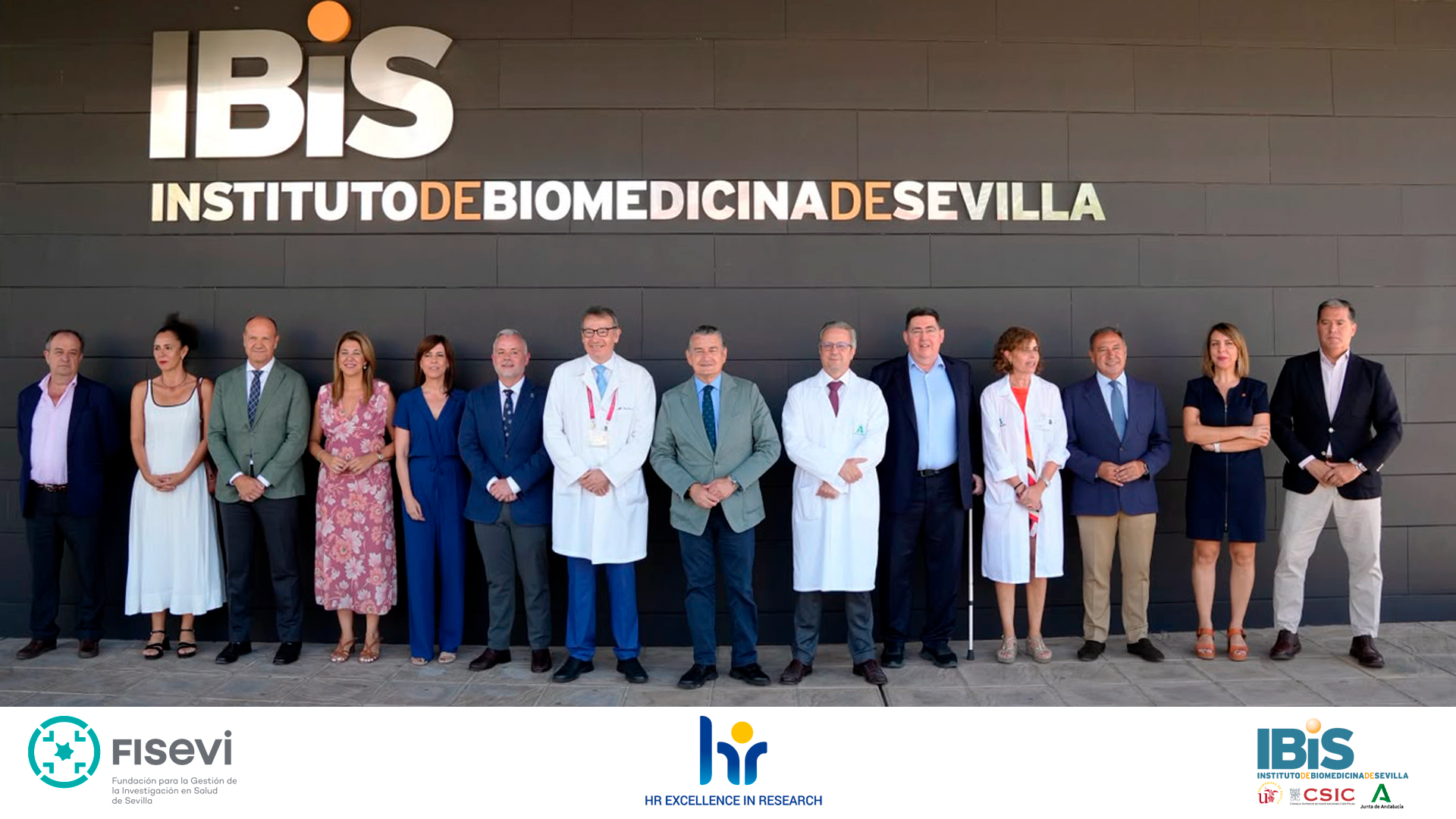
From left to right: Miguel Ángel Colmenero (Chief Executive, Virgen Macarena University Hospital), Loreto del Valle (Director-General for Research Planning), Jesús Rodríguez (Deputy Chief Executive, Virgen del Rocío University Hospital), Silvia Pozo (Territorial Delegate for the Regional Ministry of the Presidency, Health and Emergencies), Áurea Morillo (Secretary-General for Research, Innovation and Digital Health), Nicolás Navarro (Deputy Regional Minister for the Presidency, Health and Emergencies), Rafael Fernández Chacón (Director of IBiS), Antonio Sanz (First Vice-President of the Regional Government of Andalusia and Regional Minister for the Presidency, Health and Emergencies), José Antonio Pérez Simón (Deputy Director of IBiS), José Cañón (Chief Executive of FISEVI and IBiS), Elisa Cordero (Medical Director, Virgen del Rocío University Hospital), Ricardo Sánchez (Regional Government Delegate of the Government of Andalusia in Seville), Ana María Porcel (Professor of Nursing, University of Seville), and Gonzalo Balbontín (Managing Director of the Progreso y Salud Foundation).
During his visit, Sanz announced that the Andalusian Government will invest €6 million in the refurbishment of part of the building. This investment will enable IBiS to accommodate the academic platform for the production of CAR-T cell therapies, which is currently located at the Regional Centre for Blood Transfusion, Tissues and Cells in Seville.
According to the Regional Minister, the new facility will include clean rooms, cell production laboratories, quality control facilities and specialised technical areas. In addition, new laboratories and technology platforms will be built. “This expansion will enable IBiS to continue growing by developing new lines of research, attracting national and international research talent, increasing its participation in competitive European and national projects, and providing its own infrastructure for the development of advanced CAR-T therapies,” he said.
Sanz added that this initiative, which reflects the Andalusian Government’s “firm commitment” to research and is underpinned by the recently approved Andalusian Health Research and Innovation Strategy 2026–2027 (EIISA), “will help consolidate IBiS as a leading biomedical research centre and strengthen Andalusia’s position in the fields of personalised medicine and advanced therapies”.
In this regard, the Regional Minister for Health recalled that IBiS has become the second public centre in Spain authorised to produce the lentiviral vectors required for the manufacture of CAR-T therapies. “The production of these lentiviral vectors is one of the main bottlenecks in bringing academic CAR-T therapies from the laboratory to patients. This is why the creation of this academic platform is so important,” he said. The platform will make it possible “to manufacture advanced therapies for myeloma, lymphomas and other cancers, while supporting a national public network and expanding treatment options for patients with haematological malignancies”.
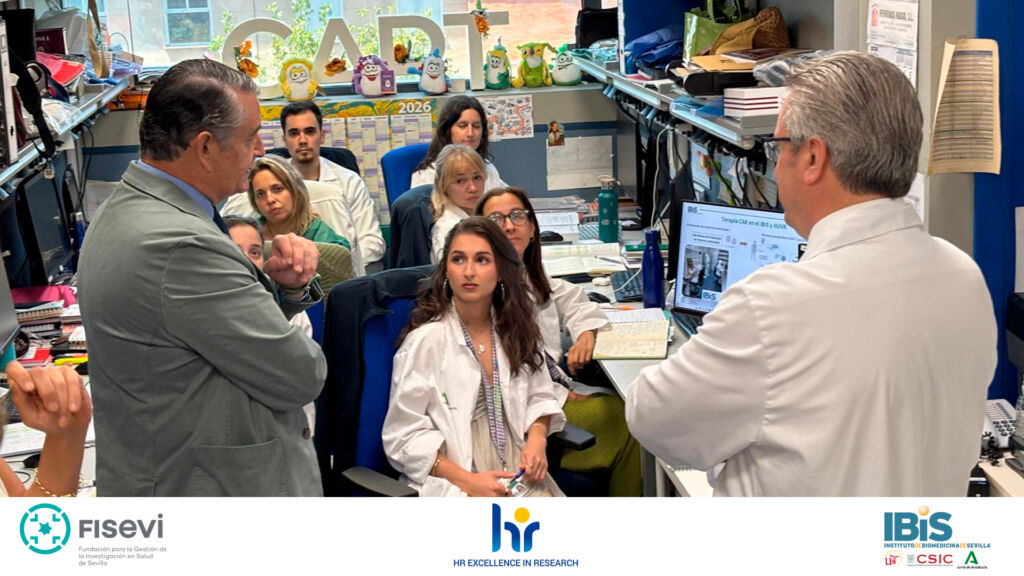
Antonio Sanz visits the IBiS Cell Therapy and New Therapeutic Targets in Onco-hematologyy Research Group Laboratory | FISEVI-IBiS Communication Unit
Antonio Sanz also announced that IBiS has expanded its single-cell analysis capabilities with the incorporation of a spatial multi-omics system. “This unique infrastructure in Spain makes it possible to study cells without losing information about their location and interactions within the tissue.” Funded through the FORTALECE programme of the Carlos III Health Institute, the system “will enable research and innovation to be fully integrated into the day-to-day operation of the Public Health System, one of the objectives set out in the EIISA”.
The First Vice-President also highlighted that the expansion of the IBiS facilities—where more than 1,400 people currently work, including researchers (who represent 84% of the workforce), administrative staff and management personnel, organised into 40 established research groups and 44 affiliated groups led by researchers from the University of Seville, the Spanish National Research Council (CSIC), and the Virgen del Rocío, Virgen Macarena and Virgen de Valme University Hospitals—represents “a further step towards strengthening the position of Seville and Andalusia as a hub for biomedical innovation”.
IBiS, the first institute within the Andalusian Public Health System to be accredited by the Carlos III Health Institute, currently occupies 8,000 square metres, comprising 67 laboratories and three research platforms: a biobank, a clinical trials unit and a technological innovation platform.
“The most important aspect,” the Regional Minister emphasised, “is that the knowledge generated through this research, carried out at the molecular and cellular levels, is translated directly into clinical practice and the development of new therapies.” He concluded: “This translational research, one of the defining characteristics of IBiS, is only possible because it brings together molecular medicine and high-quality clinical practice under one roof.”
During the visit, the Regional Minister was accompanied by Nicolás Navarro, Deputy Regional Minister for Health and Consumer Affairs; Áurea Morillo, Secretary General for Research, Innovation and Digital Health; Daniel Escacena, Secretary General for Research and Innovation at the Regional Ministry of University, Research and Innovation; Ricardo Sánchez, the Regional Government’s Delegate in Seville; Silvia Pozo, Territorial Delegate for Health; Gonzalo Balbontín, Managing Director of the Progress and Health Foundation; Rafael Fernández Chacón, Director of IBiS; José Antonio Pérez Simón, Deputy Director of IBiS; and José Cañón Campos, Chief Executive Officer of FISEVI and IBiS, among other officials.
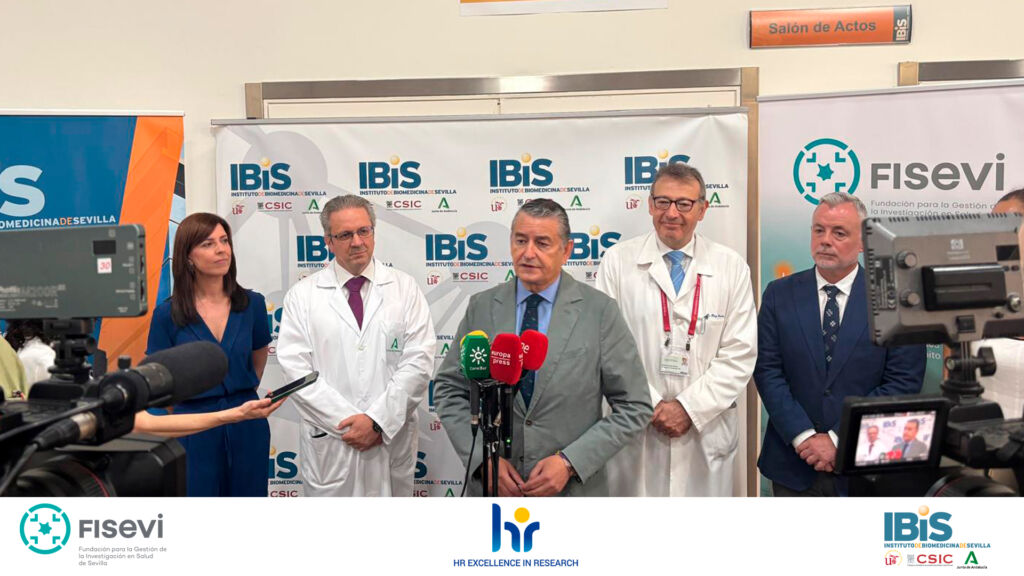
Antonio Sanz, First Vice-President and Regional Minister for the Presidency, Health and Emergencies, speaks to the media during his visit to IBiS | FISEVI-IBiS Communication Unit
IBiS to Expand Its Facilities to House a CAR-T Cell Therapy Manufacturing Platform
The First Vice-President of the Regional Government of Andalusia and Regional Minister for the Presidency, Health and Emergency Services, Antonio Sanz, visited the facilities of the Institute of Biomedicine of Seville (IBiS) to gain first-hand insight into the centre’s current activities and the projects currently being carried out at the institute, which is managed by FISEVI.
From left to right: Miguel Ángel Colmenero (Chief Executive, Virgen Macarena University Hospital), Loreto del Valle (Director-General for Research Planning), Jesús Rodríguez (Deputy Chief Executive, Virgen del Rocío University Hospital), Silvia Pozo (Territorial Delegate for the Regional Ministry of the Presidency, Health and Emergencies), Áurea Morillo (Secretary-General for Research, Innovation and Digital Health), Nicolás Navarro (Deputy Regional Minister for the Presidency, Health and Emergencies), Rafael Fernández Chacón (Director of IBiS), Antonio Sanz (First Vice-President of the Regional Government of Andalusia and Regional Minister for the Presidency, Health and Emergencies), José Antonio Pérez Simón (Deputy Director of IBiS), José Cañón (Chief Executive of FISEVI and IBiS), Elisa Cordero (Medical Director, Virgen del Rocío University Hospital), Ricardo Sánchez (Regional Government Delegate of the Government of Andalusia in Seville), Ana María Porcel (Professor of Nursing, University of Seville), and Gonzalo Balbontín (Managing Director of the Progreso y Salud Foundation).
During his visit, Sanz announced that the Andalusian Government will invest €6 million in the refurbishment of part of the building. This investment will enable IBiS to accommodate the academic platform for the production of CAR-T cell therapies, which is currently located at the Regional Centre for Blood Transfusion, Tissues and Cells in Seville.
According to the Regional Minister, the new facility will include clean rooms, cell production laboratories, quality control facilities and specialised technical areas. In addition, new laboratories and technology platforms will be built. “This expansion will enable IBiS to continue growing by developing new lines of research, attracting national and international research talent, increasing its participation in competitive European and national projects, and providing its own infrastructure for the development of advanced CAR-T therapies,” he said.
Sanz added that this initiative, which reflects the Andalusian Government’s “firm commitment” to research and is underpinned by the recently approved Andalusian Health Research and Innovation Strategy 2026–2027 (EIISA), “will help consolidate IBiS as a leading biomedical research centre and strengthen Andalusia’s position in the fields of personalised medicine and advanced therapies”.
In this regard, the Regional Minister for Health recalled that IBiS has become the second public centre in Spain authorised to produce the lentiviral vectors required for the manufacture of CAR-T therapies. “The production of these lentiviral vectors is one of the main bottlenecks in bringing academic CAR-T therapies from the laboratory to patients. This is why the creation of this academic platform is so important,” he said. The platform will make it possible “to manufacture advanced therapies for myeloma, lymphomas and other cancers, while supporting a national public network and expanding treatment options for patients with haematological malignancies”.
Antonio Sanz visits the IBiS Cell Therapy and New Therapeutic Targets in Onco-hematologyy Research Group Laboratory | FISEVI-IBiS Communication Unit
Antonio Sanz also announced that IBiS has expanded its single-cell analysis capabilities with the incorporation of a spatial multi-omics system. “This unique infrastructure in Spain makes it possible to study cells without losing information about their location and interactions within the tissue.” Funded through the FORTALECE programme of the Carlos III Health Institute, the system “will enable research and innovation to be fully integrated into the day-to-day operation of the Public Health System, one of the objectives set out in the EIISA”.
The First Vice-President also highlighted that the expansion of the IBiS facilities—where more than 1,400 people currently work, including researchers (who represent 84% of the workforce), administrative staff and management personnel, organised into 40 established research groups and 44 affiliated groups led by researchers from the University of Seville, the Spanish National Research Council (CSIC), and the Virgen del Rocío, Virgen Macarena and Virgen de Valme University Hospitals—represents “a further step towards strengthening the position of Seville and Andalusia as a hub for biomedical innovation”.
IBiS, the first institute within the Andalusian Public Health System to be accredited by the Carlos III Health Institute, currently occupies 8,000 square metres, comprising 67 laboratories and three research platforms: a biobank, a clinical trials unit and a technological innovation platform.
“The most important aspect,” the Regional Minister emphasised, “is that the knowledge generated through this research, carried out at the molecular and cellular levels, is translated directly into clinical practice and the development of new therapies.” He concluded: “This translational research, one of the defining characteristics of IBiS, is only possible because it brings together molecular medicine and high-quality clinical practice under one roof.”
During the visit, the Regional Minister was accompanied by Nicolás Navarro, Deputy Regional Minister for Health and Consumer Affairs; Áurea Morillo, Secretary General for Research, Innovation and Digital Health; Daniel Escacena, Secretary General for Research and Innovation at the Regional Ministry of University, Research and Innovation; Ricardo Sánchez, the Regional Government’s Delegate in Seville; Silvia Pozo, Territorial Delegate for Health; Gonzalo Balbontín, Managing Director of the Progress and Health Foundation; Rafael Fernández Chacón, Director of IBiS; José Antonio Pérez Simón, Deputy Director of IBiS; and José Cañón Campos, Chief Executive Officer of FISEVI and IBiS, among other officials.
Antonio Sanz, First Vice-President and Regional Minister for the Presidency, Health and Emergencies, speaks to the media during his visit to IBiS | FISEVI-IBiS Communication Unit
Publicado el: 17/07/2026
Compartir en:
