

News
News
Published on 18/06/2026
The EQUICARES Wellbeing Laboratory Is Launched: A Pioneering Nursing-Led Project to Reduce Mental Health Inequalities
Share on:
- Professor of Nursing Marta Lima is leading the Community Wellbeing Laboratory, a pioneering nursing-led initiative in Seville established with the aim of reducing inequalities in access to mental health care among minority and vulnerable population groups.
- The Community Wellbeing Laboratory is part of the European EQUICARES project and was created in response to the needs of people who do not receive adequate care from health and social services due to social, cultural, economic, administrative, or discrimination-related barriers.
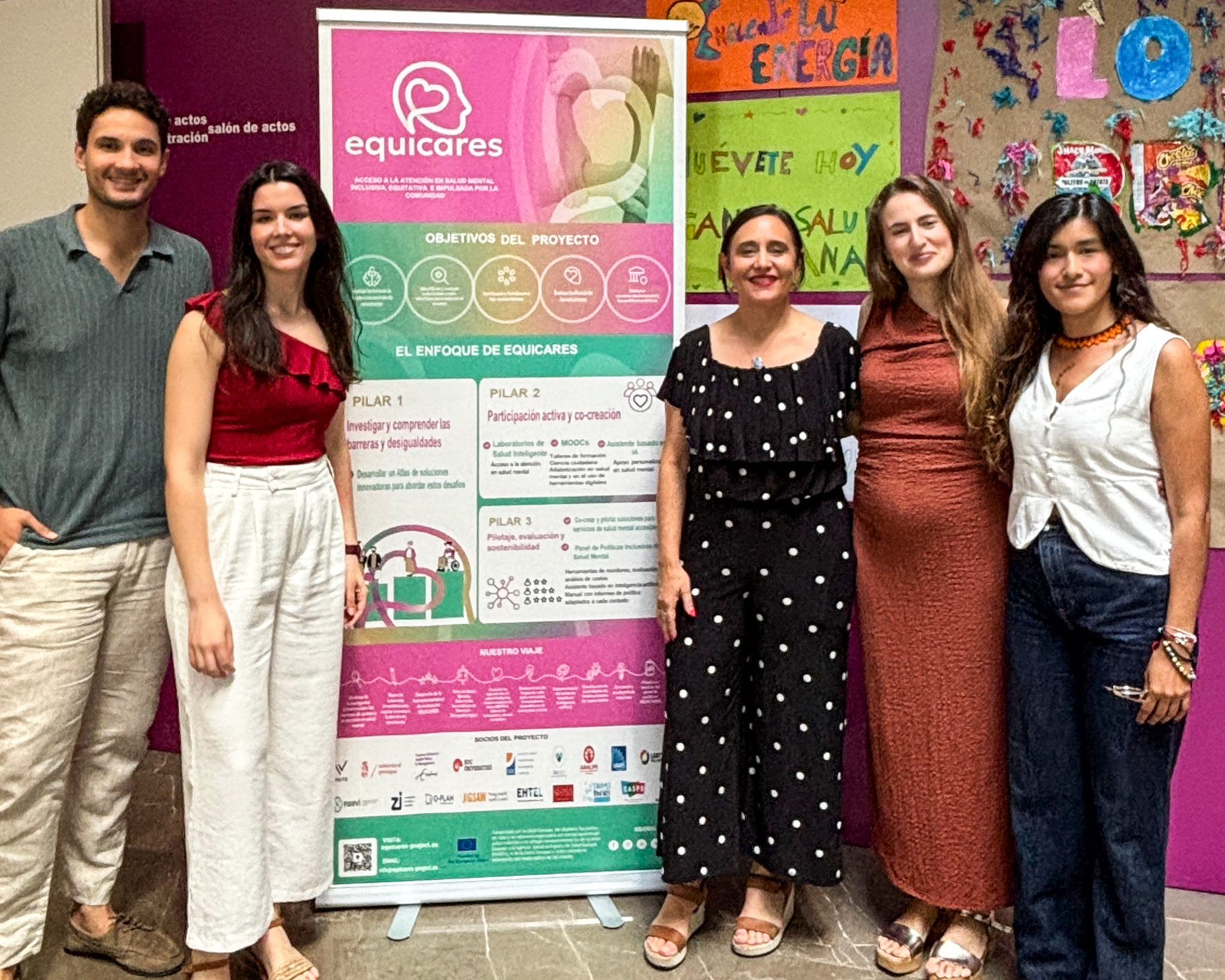
On June 17, the Commissioner’s Office for Polígono Sur hosted the launch of the Community Wellbeing Laboratory, an innovative nursing-led initiative being piloted in Seville within the framework of the European EQUICARES Project to address profound inequalities in mental health. Professor of Nursing at the University of Seville and Principal Investigator, Marta Lima, is spearheading this ambitious initiative to promote equal access to health and social care services. The laboratory will identify barriers and develop effective solutions through the participation of organizations, citizens, experts, and public institutions.
“In Seville, the laboratory will focus particularly on the experiences of the Roma population and Latin American migrants. Through community meetings, participatory activities, and dialogue spaces, we will identify the main difficulties these communities face in accessing wellbeing and mental health resources, as well as potential solutions to overcome them,” explains Professor Marta Lima.
The Community Wellbeing Laboratory is supported by the Official College of Nursing of Seville (ICOES). “The institution is firmly committed to innovative nursing projects such as this laboratory, whose goal is to advance health equity,” states ICOES President Víctor Bohórquez.
Also attending the event was Silvia Pozo, Territorial Delegate for Health and Consumer Affairs of the Regional Government of Andalusia in Seville, who highlighted the regional administration’s strong commitment to innovation and equitable healthcare. Pozo emphasized the role of nursing and community-based research as essential drivers in removing barriers to public resources, ensuring mental health care that is fairer, more humane, and closer to the needs of the province’s most vulnerable groups.
EQUICARES: A European Project
The Community Wellbeing Laboratory forms part of the European EQUICARES project, a major initiative funded with nearly €6 million through the Horizon Europe research and innovation programme. The project brings together 18 organizations from nine countries. At the local level, it is driven by researchers from the University of Seville affiliated with the Institute of Biomedicine of Seville (IBiS) and coordinated by the FISEVI Foundation. Its primary objective is to reduce inequalities and transform care systems by generating robust scientific evidence to improve public policies and healthcare organization.
“One of the most innovative aspects of the project is the creation of laboratories based on the principles of citizen science. This means that people participate not only as users or beneficiaries of services but also actively contribute to identifying problems, proposing solutions, and evaluating interventions that directly affect them. In other words, the community moves from being a recipient of decisions to becoming an agent of change,” adds the professor.
The initiative directly addresses the structural barriers and social determinants that exclude these communities from the healthcare system. Among the main obstacles are stigma and anti-Roma discrimination, poverty, administrative insecurity or lack of legal documentation in the case of migrants, and bureaucratic barriers. The project also examines the limitations of the traditional biomedical model, which often overlooks crucial elements for healing within these cultures, such as familism—the central role of family networks in decision-making—and the importance of spiritual and community support.
MENTAL HEALTH ATLAS
EQUICARES integrates nursing care, citizen science, and digital health into a roadmap that includes technological and participatory innovations. Among its transformative tools are the European Mental Health Atlas and an artificial intelligence-powered conversational assistant designed to help patients navigate the complex landscape of available services and resources.
The project is distinguished by its strong commitment to sustainability and long-term impact, with the ambition of ensuring that the Community Wellbeing Laboratory remains active beyond the project’s completion in 2028. To guarantee this institutional and community continuity, strategic partnerships are already being consolidated with leading social organizations—including FAKALI, FAISEM, Asaenes, and Accem—as well as key public institutions such as the Andalusian Health Service and the City Council of Seville. These collaborations will help ensure that the pilot programmes become permanently integrated into the city’s healthcare and social support services.
The EQUICARES Wellbeing Laboratory Is Launched: A Pioneering Nursing-Led Project to Reduce Mental Health Inequalities
- Professor of Nursing Marta Lima is leading the Community Wellbeing Laboratory, a pioneering nursing-led initiative in Seville established with the aim of reducing inequalities in access to mental health care among minority and vulnerable population groups.
- The Community Wellbeing Laboratory is part of the European EQUICARES project and was created in response to the needs of people who do not receive adequate care from health and social services due to social, cultural, economic, administrative, or discrimination-related barriers.
On June 17, the Commissioner’s Office for Polígono Sur hosted the launch of the Community Wellbeing Laboratory, an innovative nursing-led initiative being piloted in Seville within the framework of the European EQUICARES Project to address profound inequalities in mental health. Professor of Nursing at the University of Seville and Principal Investigator, Marta Lima, is spearheading this ambitious initiative to promote equal access to health and social care services. The laboratory will identify barriers and develop effective solutions through the participation of organizations, citizens, experts, and public institutions.
“In Seville, the laboratory will focus particularly on the experiences of the Roma population and Latin American migrants. Through community meetings, participatory activities, and dialogue spaces, we will identify the main difficulties these communities face in accessing wellbeing and mental health resources, as well as potential solutions to overcome them,” explains Professor Marta Lima.
The Community Wellbeing Laboratory is supported by the Official College of Nursing of Seville (ICOES). “The institution is firmly committed to innovative nursing projects such as this laboratory, whose goal is to advance health equity,” states ICOES President Víctor Bohórquez.
Also attending the event was Silvia Pozo, Territorial Delegate for Health and Consumer Affairs of the Regional Government of Andalusia in Seville, who highlighted the regional administration’s strong commitment to innovation and equitable healthcare. Pozo emphasized the role of nursing and community-based research as essential drivers in removing barriers to public resources, ensuring mental health care that is fairer, more humane, and closer to the needs of the province’s most vulnerable groups.
EQUICARES: A European Project
The Community Wellbeing Laboratory forms part of the European EQUICARES project, a major initiative funded with nearly €6 million through the Horizon Europe research and innovation programme. The project brings together 18 organizations from nine countries. At the local level, it is driven by researchers from the University of Seville affiliated with the Institute of Biomedicine of Seville (IBiS) and coordinated by the FISEVI Foundation. Its primary objective is to reduce inequalities and transform care systems by generating robust scientific evidence to improve public policies and healthcare organization.
“One of the most innovative aspects of the project is the creation of laboratories based on the principles of citizen science. This means that people participate not only as users or beneficiaries of services but also actively contribute to identifying problems, proposing solutions, and evaluating interventions that directly affect them. In other words, the community moves from being a recipient of decisions to becoming an agent of change,” adds the professor.
The initiative directly addresses the structural barriers and social determinants that exclude these communities from the healthcare system. Among the main obstacles are stigma and anti-Roma discrimination, poverty, administrative insecurity or lack of legal documentation in the case of migrants, and bureaucratic barriers. The project also examines the limitations of the traditional biomedical model, which often overlooks crucial elements for healing within these cultures, such as familism—the central role of family networks in decision-making—and the importance of spiritual and community support.
MENTAL HEALTH ATLAS
EQUICARES integrates nursing care, citizen science, and digital health into a roadmap that includes technological and participatory innovations. Among its transformative tools are the European Mental Health Atlas and an artificial intelligence-powered conversational assistant designed to help patients navigate the complex landscape of available services and resources.
The project is distinguished by its strong commitment to sustainability and long-term impact, with the ambition of ensuring that the Community Wellbeing Laboratory remains active beyond the project’s completion in 2028. To guarantee this institutional and community continuity, strategic partnerships are already being consolidated with leading social organizations—including FAKALI, FAISEM, Asaenes, and Accem—as well as key public institutions such as the Andalusian Health Service and the City Council of Seville. These collaborations will help ensure that the pilot programmes become permanently integrated into the city’s healthcare and social support services.
Publicado el: 18/06/2026
Compartir en:
