

News
News
Published on 09/10/2026
FISEVI approves its Second Equality Plan, introducing new measures to promote equal opportunities.
Share on:
- The new Plan, which will run for four years, consolidates the measures implemented to date and introduces new initiatives in areas such as recruitment, career progression, work–life balance, equal pay, training and inclusive communication.
Seville, 9 October 2026
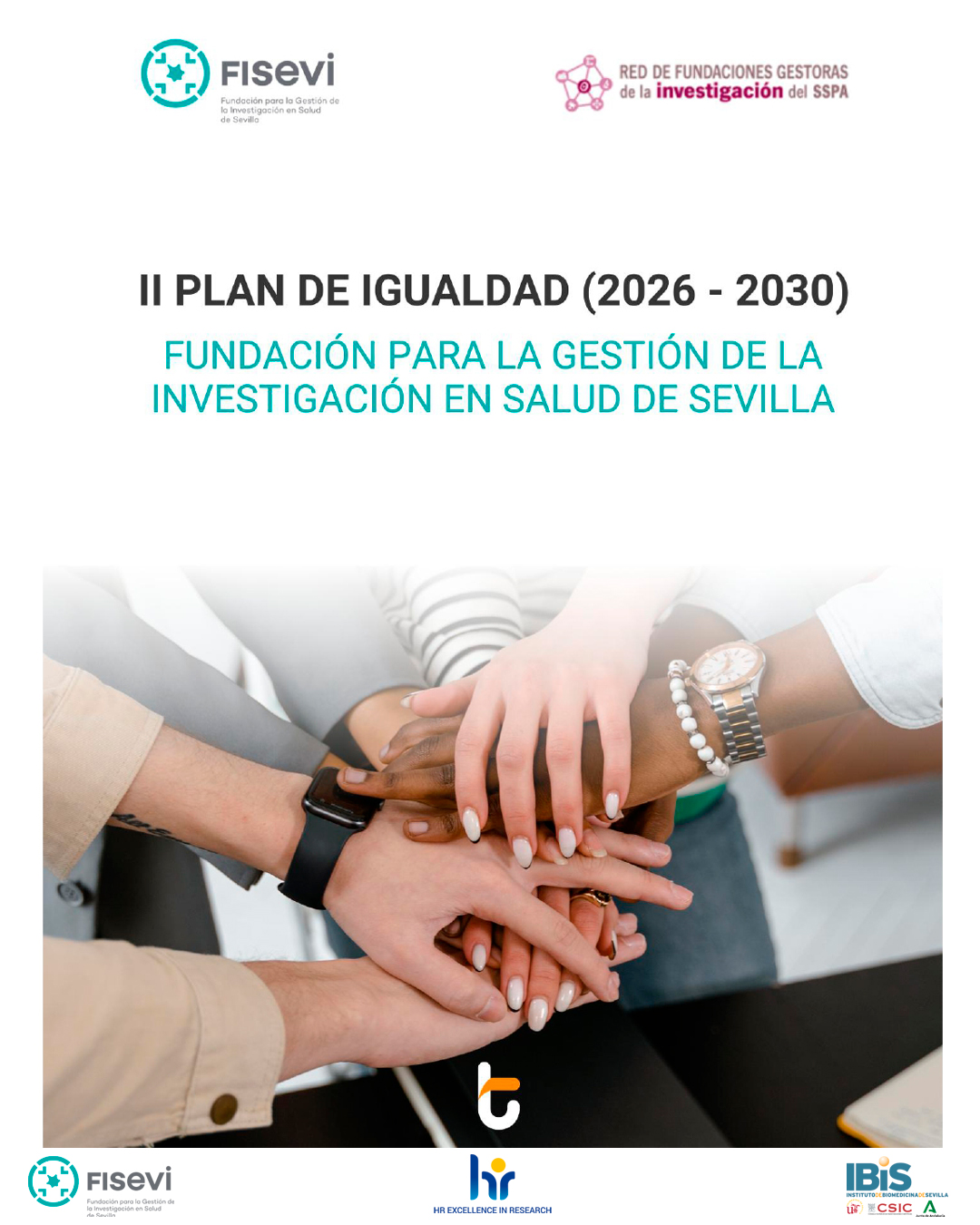
The Seville Foundation for the Management of Health Research (FISEVI) has approved its Second Equality Plan, which will be in force from 17 September 2026 to 16 September 2030. The new Plan builds on the work carried out by the Foundation in recent years and strengthens its commitment to equal treatment and equal opportunities for women and men.
The document has been drawn up on the basis of a new situational analysis and a pay audit, which have made it possible to identify the organisation’s main strengths and areas for improvement to be addressed over the next four years. The Plan was negotiated and signed by the Negotiating Committee, which includes representatives of FISEVI and its employees.
One of the objectives of the new Plan is to consolidate an organisational culture based on equal treatment and equal opportunities, strengthening the measures implemented during the previous period and introducing new initiatives tailored to the needs identified in the analysis. Equality is therefore established as a cross-cutting principle underpinning the Foundation’s people management and activities.
The Second Equality Plan is structured around 11 areas of action, ranging from cross-cutting measures, recruitment and hiring to career progression, training and awareness-raising, job classification, working conditions and occupational health, work–life balance and shared responsibility, pay, the prevention of sexual harassment and harassment on grounds of sex, inclusive communication and gender-based violence. Each area sets out objectives, specific measures, those responsible for implementation, priorities, a timetable and monitoring indicators.
A diverse and committed workforce
The analysis carried out as part of the Plan reflects a workforce of 732 people, of whom 541 are women and 191 are men, representing 73.91% female representation. The analysis shows that women make up the majority in all three of FISEVI’s main functional groups and identifies no overall situation of female under-representation.
Similarly, the analysis reveals no significant sex-based differences in areas such as temporary employment or part-time working. In terms of recruitment and hiring, the data analysed also show no significant differences in access to employment. Nevertheless, the Plan provides for improved traceability of recruitment processes and particular attention to professional profiles in which imbalances in the participation of women and men may arise.
Training is also an established area of activity, with participation levels proportionate to the composition of the workforce and training activities taking place during working hours. The new Plan aims to make further progress by introducing a wider variety of shorter, more participatory training formats, while also strengthening the training of those responsible for implementing and monitoring equality policies.
Equality, work–life balance, prevention and inclusive communication
The new Plan maintains and strengthens measures designed to support work–life balance and shared responsibility, prevent all forms of sexual harassment and harassment on grounds of sex, and ensure protection and support for people experiencing gender-based violence.
In this area, FISEVI already has a Guide to Measures for Victims of Gender-Based Violence and a Protocol for Action in Situations of Gender-Based Violence. These documents establish specific resources and guidelines for providing assistance, support, follow-up and protection.
Inclusive communication is also one of the Plan’s areas of action. FISEVI has procedures in place to review its communications and provides specific training in non-sexist communication and inclusive language. The new Plan aims to maintain these practices and strengthen internal communication to improve awareness of equality policies and keep employees regularly informed of the measures implemented and the progress achieved.
A Plan with monitoring and evaluation
The implementation of the Second Equality Plan will be accompanied by a system of regular monitoring and evaluation overseen by the Equality Commission. This will make it possible to assess the extent to which the measures have been fulfilled, verify their implementation and identify any deviations or areas requiring improvement.
The system provides for annual monitoring reports, a mid-term evaluation during the Plan’s period of implementation and a final evaluation during the last three months of that period. In this way, the Plan is conceived as a dynamic tool for planning and continuous improvement, rather than merely a document designed to ensure regulatory compliance.
FISEVI approves its Second Equality Plan, introducing new measures to promote equal opportunities.
- The new Plan, which will run for four years, consolidates the measures implemented to date and introduces new initiatives in areas such as recruitment, career progression, work–life balance, equal pay, training and inclusive communication.
Seville, 9 October 2026
The Seville Foundation for the Management of Health Research (FISEVI) has approved its Second Equality Plan, which will be in force from 17 September 2026 to 16 September 2030. The new Plan builds on the work carried out by the Foundation in recent years and strengthens its commitment to equal treatment and equal opportunities for women and men.
The document has been drawn up on the basis of a new situational analysis and a pay audit, which have made it possible to identify the organisation’s main strengths and areas for improvement to be addressed over the next four years. The Plan was negotiated and signed by the Negotiating Committee, which includes representatives of FISEVI and its employees.
One of the objectives of the new Plan is to consolidate an organisational culture based on equal treatment and equal opportunities, strengthening the measures implemented during the previous period and introducing new initiatives tailored to the needs identified in the analysis. Equality is therefore established as a cross-cutting principle underpinning the Foundation’s people management and activities.
The Second Equality Plan is structured around 11 areas of action, ranging from cross-cutting measures, recruitment and hiring to career progression, training and awareness-raising, job classification, working conditions and occupational health, work–life balance and shared responsibility, pay, the prevention of sexual harassment and harassment on grounds of sex, inclusive communication and gender-based violence. Each area sets out objectives, specific measures, those responsible for implementation, priorities, a timetable and monitoring indicators.
A diverse and committed workforce
The analysis carried out as part of the Plan reflects a workforce of 732 people, of whom 541 are women and 191 are men, representing 73.91% female representation. The analysis shows that women make up the majority in all three of FISEVI’s main functional groups and identifies no overall situation of female under-representation.
Similarly, the analysis reveals no significant sex-based differences in areas such as temporary employment or part-time working. In terms of recruitment and hiring, the data analysed also show no significant differences in access to employment. Nevertheless, the Plan provides for improved traceability of recruitment processes and particular attention to professional profiles in which imbalances in the participation of women and men may arise.
Training is also an established area of activity, with participation levels proportionate to the composition of the workforce and training activities taking place during working hours. The new Plan aims to make further progress by introducing a wider variety of shorter, more participatory training formats, while also strengthening the training of those responsible for implementing and monitoring equality policies.
Equality, work–life balance, prevention and inclusive communication
The new Plan maintains and strengthens measures designed to support work–life balance and shared responsibility, prevent all forms of sexual harassment and harassment on grounds of sex, and ensure protection and support for people experiencing gender-based violence.
In this area, FISEVI already has a Guide to Measures for Victims of Gender-Based Violence and a Protocol for Action in Situations of Gender-Based Violence. These documents establish specific resources and guidelines for providing assistance, support, follow-up and protection.
Inclusive communication is also one of the Plan’s areas of action. FISEVI has procedures in place to review its communications and provides specific training in non-sexist communication and inclusive language. The new Plan aims to maintain these practices and strengthen internal communication to improve awareness of equality policies and keep employees regularly informed of the measures implemented and the progress achieved.
A Plan with monitoring and evaluation
The implementation of the Second Equality Plan will be accompanied by a system of regular monitoring and evaluation overseen by the Equality Commission. This will make it possible to assess the extent to which the measures have been fulfilled, verify their implementation and identify any deviations or areas requiring improvement.
The system provides for annual monitoring reports, a mid-term evaluation during the Plan’s period of implementation and a final evaluation during the last three months of that period. In this way, the Plan is conceived as a dynamic tool for planning and continuous improvement, rather than merely a document designed to ensure regulatory compliance.
Publicado el: 09/10/2026
Compartir en:
