

News
News
Published on 03/07/2026
Number of health researchers in Andalusia rises to more than 9,000, up 53% over the past seven years
Share on:
- Antonio Sanz launches the €102 million Andalusian Health Research and Innovation Strategy 2026–2027
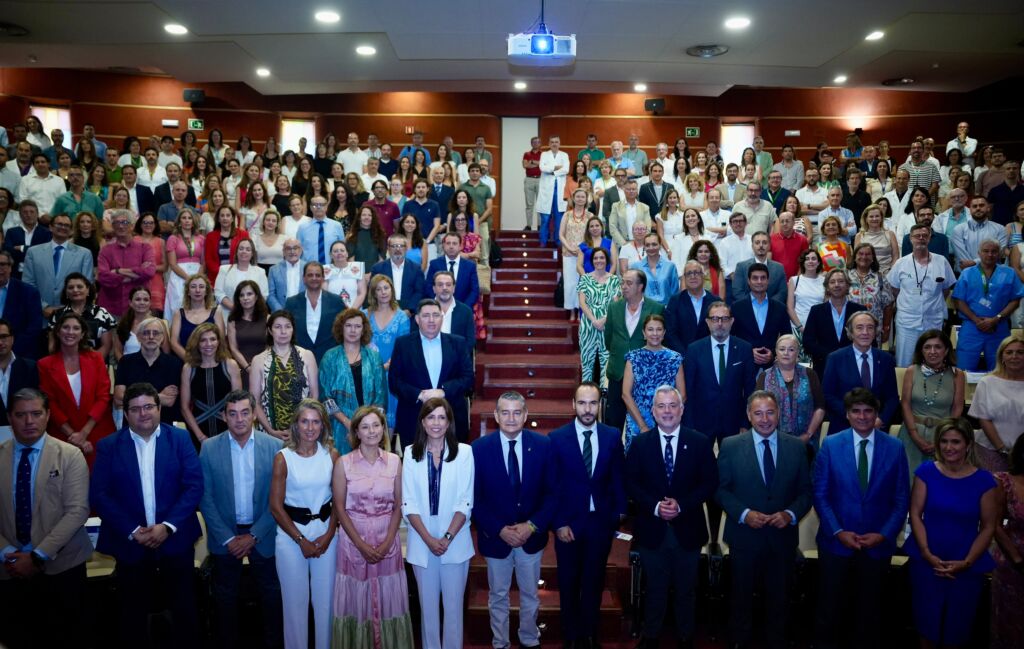
Photograph: Andalusian Public Foundation for Progress and Health – Regional Ministry of Health, the Presidency and Emergencies of the Regional Government of Andalusia.
The Acting Minister for Health, the Presidency and Emergencies, Antonio Sanz, has highlighted that the number of researchers working in the field of biomedical and health sciences in Andalusia has increased by 53% over the past seven years. Speaking at the presentation of the Andalusian Health Research and Innovation Strategy 2026–2027 (EIISA 2026–2027), he noted that the number of people dedicated to health research has risen from 6,110 in 2019 to 9,319 this year. He described this as “a clear reflection of this Government’s commitment to strengthening health research and innovation as a fundamental part of the care we provide to our patients.”
Antonio Sanz also explained that Andalusia currently has 553 research groups and more than 6,000 active clinical studies (6,082), adding that “since 2019, the number of research groups has increased by 44% and the number of clinical studies by 47%.”
During his address at the event, held at the Virgen del Rocío University Hospital in Seville, the Acting Minister expressed his confidence that these figures will continue to grow thanks to the support provided by the EIISA for researchers, together with the forthcoming Andalusian Public Health Research and Innovation Plan 2026–2027, the draft of which, he announced, “will be submitted for public consultation next week.”
He stressed that the EIISA 2026–2027 has been designed to consolidate Andalusia as “a national and international benchmark” in health research and innovation, with the aim of ensuring that the Andalusian Public Health System becomes “a leader in generating cutting-edge knowledge, adopting emerging therapies and technologies, and attracting and training outstanding research talent.”
“But we also want this strategy to contribute to the scientific and technological progress of Andalusia as a whole,” he added. As he pointed out, “for every euro invested by the Regional Government of Andalusia, between €2 and €3.10 of external funding is attracted, helping to stimulate and strengthen the sector’s economy.”
The Acting Minister recalled that the EIISA 2026–2027 has been allocated a budget of €102 million for its implementation. He also underlined that the majority of research projects carried out in Andalusia are “largely supported through public funding, competitive national and European funding schemes, as well as the essential public-private partnerships that enable research to progress.”
He also announced that four Andalusian projects have recently secured funding through the Ministry’s Innovation Procurement from Demand programme. These four projects, with a combined budget of €22.7 million, will be co-financed by the European Regional Development Fund (ERDF), which will provide 85% of the funding, while the remaining 15% will be contributed by the Andalusian Public Health System.
Specifically, Antonio Sanz explained that the Surgia project proposes a simulation, planning and scheduling system designed to optimise surgical pathways across the Andalusian public healthcare system. “It is a project with significant management value and the potential to reduce waiting lists, improve operating theatre efficiency, optimise resource planning and enhance clinical outcomes,” he said.
The second project, Oráculo, focuses on integrating clinical, pathological, omics and imaging biomarkers using artificial intelligence algorithms for genitourinary tumours. The third project, Prisma, is aimed at the protection, reuse, synthesis and advanced management of healthcare data.
Finally, PIAPPA establishes an innovation programme covering perinatal and paediatric care in Andalusia and encompasses three additional projects. “Its strategic importance lies in improving key healthcare processes, early intervention, continuity of care and innovation applied to maternal and child health,” the Acting Minister explained.
Convinced that “health research and innovation are essential drivers for addressing the major challenges of our time, including population ageing, chronic diseases, emerging illnesses, mental health and the necessary digital transformation of our healthcare services,” Antonio Sanz stated that “Andalusia can take pride in the progress achieved over recent years.”
He highlighted “our unique model for managing and supporting health research, development and innovation; the fact that we now have five health research institutes accredited by the Carlos III Health Institute; increased investment in research personnel and improved job stability for researchers; and our leadership in research careers, having become the first autonomous community in Spain to regulate statutory professional categories for clinician-researchers, including both doctors and nurses.”
He continued: “We can also be proud of the clinical research being carried out in Andalusia, the advanced therapies we are developing and already applying, our digital health projects, our commitment to innovation procurement, and our continued investment in research and innovation through initiatives such as the Health Research Hub announced by the President, Juanma Moreno, earlier this week, together with this strategy, which provides a clear roadmap for the future.”
These achievements are complemented by “important legislative milestones”, including the creation of specific biomedical research career pathways, an investment of €18.84 million to recruit 154 postdoctoral researchers, the Investiga C and Investiga C+ programmes, and renewed support for Primary Care.
The Acting Minister concluded by thanking all the professionals, institutions and organisations that contributed to the preparation of the EIISA, stating: “Through your daily commitment, you are helping to make Andalusia a land of science, innovation and hope.”
“I am convinced that our joint efforts, public-private collaboration and the commitment of Andalusian society as a whole will enable us to achieve the objectives set out in this strategy,” he said, before concluding: “The EIISA 2026–2027 is not simply a work plan; it is a commitment to health, prevention, wellbeing and the future of our region.”
The event was attended by the Deputy Minister for Health and Consumer Affairs, Nicolás Navarro; the Government Delegate in Seville, Ricardo Sánchez; the Managing Director of the Andalusian Health Service (SAS), Valle García; the Secretary General for Research, Innovation and Digital Health, Áurea Morillo; the Secretary General for Humanisation, Quality and Healthcare Planning, Silvia Maraver; the Secretary General for Research and Innovation, Daniel Escacena; the Managing Director of the Progress and Health Foundation, Gonzalo Balbontín; the Managing Director of the Andalusian School of Public Health, Blanca Botello; and the EIISA Coordinator, Ángel Chimenea, together with other representatives and public officials.
-As reported by Health, the Presidency and Emergencies of the Regional Government of Andalusia: https://www.juntadeandalucia.es/organismos/fps/servicios/actualidad/noticias/detalle/671998.html
Number of health researchers in Andalusia rises to more than 9,000, up 53% over the past seven years
- Antonio Sanz launches the €102 million Andalusian Health Research and Innovation Strategy 2026–2027
Photograph: Andalusian Public Foundation for Progress and Health – Regional Ministry of Health, the Presidency and Emergencies of the Regional Government of Andalusia.
The Acting Minister for Health, the Presidency and Emergencies, Antonio Sanz, has highlighted that the number of researchers working in the field of biomedical and health sciences in Andalusia has increased by 53% over the past seven years. Speaking at the presentation of the Andalusian Health Research and Innovation Strategy 2026–2027 (EIISA 2026–2027), he noted that the number of people dedicated to health research has risen from 6,110 in 2019 to 9,319 this year. He described this as “a clear reflection of this Government’s commitment to strengthening health research and innovation as a fundamental part of the care we provide to our patients.”
Antonio Sanz also explained that Andalusia currently has 553 research groups and more than 6,000 active clinical studies (6,082), adding that “since 2019, the number of research groups has increased by 44% and the number of clinical studies by 47%.”
During his address at the event, held at the Virgen del Rocío University Hospital in Seville, the Acting Minister expressed his confidence that these figures will continue to grow thanks to the support provided by the EIISA for researchers, together with the forthcoming Andalusian Public Health Research and Innovation Plan 2026–2027, the draft of which, he announced, “will be submitted for public consultation next week.”
He stressed that the EIISA 2026–2027 has been designed to consolidate Andalusia as “a national and international benchmark” in health research and innovation, with the aim of ensuring that the Andalusian Public Health System becomes “a leader in generating cutting-edge knowledge, adopting emerging therapies and technologies, and attracting and training outstanding research talent.”
“But we also want this strategy to contribute to the scientific and technological progress of Andalusia as a whole,” he added. As he pointed out, “for every euro invested by the Regional Government of Andalusia, between €2 and €3.10 of external funding is attracted, helping to stimulate and strengthen the sector’s economy.”
The Acting Minister recalled that the EIISA 2026–2027 has been allocated a budget of €102 million for its implementation. He also underlined that the majority of research projects carried out in Andalusia are “largely supported through public funding, competitive national and European funding schemes, as well as the essential public-private partnerships that enable research to progress.”
He also announced that four Andalusian projects have recently secured funding through the Ministry’s Innovation Procurement from Demand programme. These four projects, with a combined budget of €22.7 million, will be co-financed by the European Regional Development Fund (ERDF), which will provide 85% of the funding, while the remaining 15% will be contributed by the Andalusian Public Health System.
Specifically, Antonio Sanz explained that the Surgia project proposes a simulation, planning and scheduling system designed to optimise surgical pathways across the Andalusian public healthcare system. “It is a project with significant management value and the potential to reduce waiting lists, improve operating theatre efficiency, optimise resource planning and enhance clinical outcomes,” he said.
The second project, Oráculo, focuses on integrating clinical, pathological, omics and imaging biomarkers using artificial intelligence algorithms for genitourinary tumours. The third project, Prisma, is aimed at the protection, reuse, synthesis and advanced management of healthcare data.
Finally, PIAPPA establishes an innovation programme covering perinatal and paediatric care in Andalusia and encompasses three additional projects. “Its strategic importance lies in improving key healthcare processes, early intervention, continuity of care and innovation applied to maternal and child health,” the Acting Minister explained.
Convinced that “health research and innovation are essential drivers for addressing the major challenges of our time, including population ageing, chronic diseases, emerging illnesses, mental health and the necessary digital transformation of our healthcare services,” Antonio Sanz stated that “Andalusia can take pride in the progress achieved over recent years.”
He highlighted “our unique model for managing and supporting health research, development and innovation; the fact that we now have five health research institutes accredited by the Carlos III Health Institute; increased investment in research personnel and improved job stability for researchers; and our leadership in research careers, having become the first autonomous community in Spain to regulate statutory professional categories for clinician-researchers, including both doctors and nurses.”
He continued: “We can also be proud of the clinical research being carried out in Andalusia, the advanced therapies we are developing and already applying, our digital health projects, our commitment to innovation procurement, and our continued investment in research and innovation through initiatives such as the Health Research Hub announced by the President, Juanma Moreno, earlier this week, together with this strategy, which provides a clear roadmap for the future.”
These achievements are complemented by “important legislative milestones”, including the creation of specific biomedical research career pathways, an investment of €18.84 million to recruit 154 postdoctoral researchers, the Investiga C and Investiga C+ programmes, and renewed support for Primary Care.
The Acting Minister concluded by thanking all the professionals, institutions and organisations that contributed to the preparation of the EIISA, stating: “Through your daily commitment, you are helping to make Andalusia a land of science, innovation and hope.”
“I am convinced that our joint efforts, public-private collaboration and the commitment of Andalusian society as a whole will enable us to achieve the objectives set out in this strategy,” he said, before concluding: “The EIISA 2026–2027 is not simply a work plan; it is a commitment to health, prevention, wellbeing and the future of our region.”
The event was attended by the Deputy Minister for Health and Consumer Affairs, Nicolás Navarro; the Government Delegate in Seville, Ricardo Sánchez; the Managing Director of the Andalusian Health Service (SAS), Valle García; the Secretary General for Research, Innovation and Digital Health, Áurea Morillo; the Secretary General for Humanisation, Quality and Healthcare Planning, Silvia Maraver; the Secretary General for Research and Innovation, Daniel Escacena; the Managing Director of the Progress and Health Foundation, Gonzalo Balbontín; the Managing Director of the Andalusian School of Public Health, Blanca Botello; and the EIISA Coordinator, Ángel Chimenea, together with other representatives and public officials.
-As reported by Health, the Presidency and Emergencies of the Regional Government of Andalusia: https://www.juntadeandalucia.es/organismos/fps/servicios/actualidad/noticias/detalle/671998.html
Publicado el: 03/07/2026
Compartir en:
