

News
News
Published on 13/08/2026
New tool developed to predict the risk of poor outcomes in COVID-19 pneumonia
Share on:
- The new VIRA Score improves the ability to identify, from the time of hospital admission, patients at higher risk of death, particularly those who are immunocompromised.
Researchers affiliated with the Institute of Biomedicine of Seville (IBiS) and the Virgen del Rocío University Hospital have developed a new clinical tool that enables a more accurate estimation of the risk of mortality in patients hospitalized with SARS-CoV-2 pneumonia.
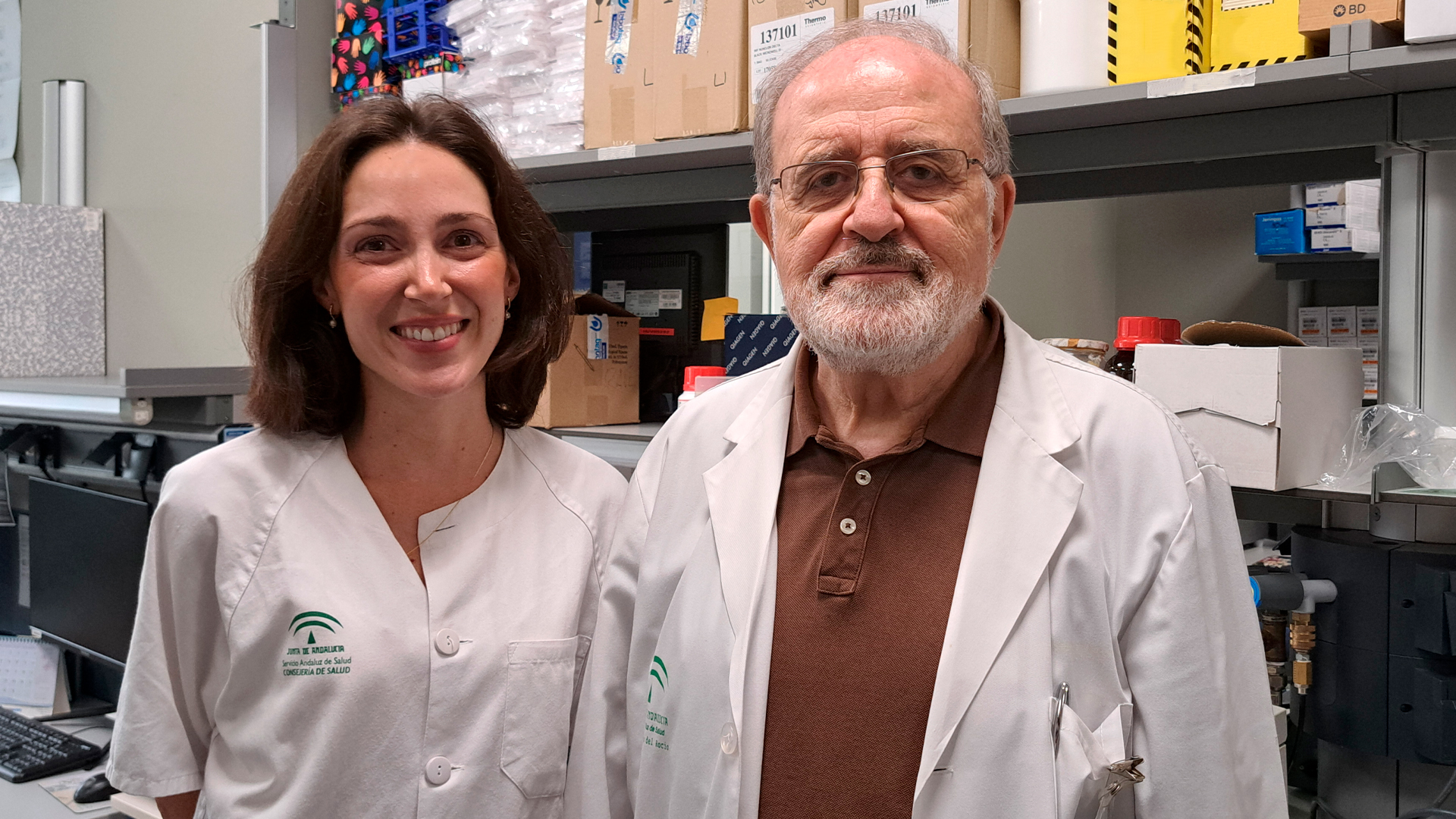
The study was led by Dr. Sonsoles Salto Alejandre, an Internal Medicine specialist at Virgen del Rocío University Hospital, and Prof. Jerónimo Pachón, Professor Emeritus of Medicine at the University of Seville and a leading expert in infectious diseases. Both are members of the Viral Infections and Immunocompromised Patients Research Group at the Institute of Biomedicine of Seville (IBiS). The research has led to the development of a new clinical tool capable of more accurately estimating the risk of mortality in patients hospitalized with SARS-CoV-2 pneumonia.
The work has resulted in the VIRA Score (Viremia-Integrated Risk Assessment), a scoring system that incorporates the presence of viral RNA in the blood—known as RNAemia or viremia—into the CURB-65 clinical assessment system, which is routinely used to assess the severity of pneumonia. The results show that this combination significantly improves the ability to identify patients at higher risk of death within 30 days of diagnosis.
A tool adapted to the current reality of COVID-19
Although the pandemic has evolved and vaccination has reduced disease severity in most of the population, COVID-19 remains an important cause of pneumonia requiring hospitalization. The challenge is particularly significant in immunocompromised individuals, such as transplant recipients, people with cancer, or patients with diseases affecting the immune system, whose risk of complications remains high.
Until now, prognostic tools used in clinical practice, such as CURB-65, had been developed for immunocompetent patients and tended to underestimate the actual risk faced by more vulnerable patients.
The presence of the virus in the blood provides key information
The study shows that detecting SARS-CoV-2 genetic material in the blood at the time of hospital admission is an independent indicator of poor prognosis.
The research group analyzed data from 819 patients treated at six Spanish hospitals between 2020 and 2023, including both immunocompetent and immunocompromised individuals. The results confirmed that incorporating RNAemia into the prognostic model substantially improves its predictive ability in both groups of patients, with the benefit being particularly relevant in immunocompromised individuals.
In this group, where conventional tools showed significant limitations, the VIRA Score made it possible to identify patients at high risk of death with considerably greater accuracy.
Improved identification of patients requiring more intensive care
Having a more accurate risk assessment from the time of diagnosis can help healthcare professionals make faster and more personalized clinical decisions, such as increasing monitoring, prioritizing certain treatments, or determining the most appropriate level of care for each patient.
The authors emphasize that the aim is not to replace existing tools, but rather to improve them by incorporating a biomarker with a strong biological basis and clear prognostic value.
An online calculator available to healthcare professionals
As part of the project, the team has developed a freely accessible online calculator (virascore.com) that provides an immediate VIRA Score and an individualized estimate of mortality risk.
Although the results are robust, the researchers point out that, as was the case with CURB-65, the tool will need to be validated in new international cohorts before its use can be generalized across different healthcare systems.
This study also represents the first validation of the CURB-65 system in immunocompromised patients with COVID-19 pneumonia in the post-vaccination era and constitutes a step forward towards more personalized medicine in the management of severe respiratory infections.
In addition to IBiS, and as part of a multicentre consortium, professionals from Virgen del Rocío University Hospital, Virgen Macarena University Hospital, Bellvitge University Hospital-IDIBELL (Barcelona), Cruces University Hospital (Bizkaia), Marqués de Valdecilla University Hospital-IDIVAL (Santander), and San Pedro Hospital-CIBIR (La Rioja) participated in the study. The Spanish Network for Research in Infectious Diseases (CIBERINFEC, ISCIII) also contributed to the research.
New tool developed to predict the risk of poor outcomes in COVID-19 pneumonia
- The new VIRA Score improves the ability to identify, from the time of hospital admission, patients at higher risk of death, particularly those who are immunocompromised.
Researchers affiliated with the Institute of Biomedicine of Seville (IBiS) and the Virgen del Rocío University Hospital have developed a new clinical tool that enables a more accurate estimation of the risk of mortality in patients hospitalized with SARS-CoV-2 pneumonia.
The study was led by Dr. Sonsoles Salto Alejandre, an Internal Medicine specialist at Virgen del Rocío University Hospital, and Prof. Jerónimo Pachón, Professor Emeritus of Medicine at the University of Seville and a leading expert in infectious diseases. Both are members of the Viral Infections and Immunocompromised Patients Research Group at the Institute of Biomedicine of Seville (IBiS). The research has led to the development of a new clinical tool capable of more accurately estimating the risk of mortality in patients hospitalized with SARS-CoV-2 pneumonia.
The work has resulted in the VIRA Score (Viremia-Integrated Risk Assessment), a scoring system that incorporates the presence of viral RNA in the blood—known as RNAemia or viremia—into the CURB-65 clinical assessment system, which is routinely used to assess the severity of pneumonia. The results show that this combination significantly improves the ability to identify patients at higher risk of death within 30 days of diagnosis.
A tool adapted to the current reality of COVID-19
Although the pandemic has evolved and vaccination has reduced disease severity in most of the population, COVID-19 remains an important cause of pneumonia requiring hospitalization. The challenge is particularly significant in immunocompromised individuals, such as transplant recipients, people with cancer, or patients with diseases affecting the immune system, whose risk of complications remains high.
Until now, prognostic tools used in clinical practice, such as CURB-65, had been developed for immunocompetent patients and tended to underestimate the actual risk faced by more vulnerable patients.
The presence of the virus in the blood provides key information
The study shows that detecting SARS-CoV-2 genetic material in the blood at the time of hospital admission is an independent indicator of poor prognosis.
The research group analyzed data from 819 patients treated at six Spanish hospitals between 2020 and 2023, including both immunocompetent and immunocompromised individuals. The results confirmed that incorporating RNAemia into the prognostic model substantially improves its predictive ability in both groups of patients, with the benefit being particularly relevant in immunocompromised individuals.
In this group, where conventional tools showed significant limitations, the VIRA Score made it possible to identify patients at high risk of death with considerably greater accuracy.
Improved identification of patients requiring more intensive care
Having a more accurate risk assessment from the time of diagnosis can help healthcare professionals make faster and more personalized clinical decisions, such as increasing monitoring, prioritizing certain treatments, or determining the most appropriate level of care for each patient.
The authors emphasize that the aim is not to replace existing tools, but rather to improve them by incorporating a biomarker with a strong biological basis and clear prognostic value.
An online calculator available to healthcare professionals
As part of the project, the team has developed a freely accessible online calculator (virascore.com) that provides an immediate VIRA Score and an individualized estimate of mortality risk.
Although the results are robust, the researchers point out that, as was the case with CURB-65, the tool will need to be validated in new international cohorts before its use can be generalized across different healthcare systems.
This study also represents the first validation of the CURB-65 system in immunocompromised patients with COVID-19 pneumonia in the post-vaccination era and constitutes a step forward towards more personalized medicine in the management of severe respiratory infections.
In addition to IBiS, and as part of a multicentre consortium, professionals from Virgen del Rocío University Hospital, Virgen Macarena University Hospital, Bellvitge University Hospital-IDIBELL (Barcelona), Cruces University Hospital (Bizkaia), Marqués de Valdecilla University Hospital-IDIVAL (Santander), and San Pedro Hospital-CIBIR (La Rioja) participated in the study. The Spanish Network for Research in Infectious Diseases (CIBERINFEC, ISCIII) also contributed to the research.
Publicado el: 13/08/2026
Compartir en:
