

News
News

Published on 24/10/2024
Hospital Universitario Virgen Macarena participates in the closing meeting of the international project ‘ORCHESTRA’ to tackle COVID-19
Share on:
More than 7,000 patients from 50 European centres have participated in this research.
37 scientists from 14 countries have met in the Italian city of Verona to finish to the ‘ORCHESTRA’ research project, funded by the European Commission’s Horizon 2020 programme, which will end next November. The project, coordinated by the Infectious Diseases Unit of the University of Verona, was born in 2020 with the aim of offering an innovative approach to learn from the SARS-CoV-2 health crisis and generate recommendations to strengthen preparedness for future outbreaks.
More than 7,000 patients with COVID-19 from 50 European centres have participated in the project, thus making it possible to accurately trace the link between the virus variants and the specific clinical conditions of each patient. During the four years of research work, the European project has achieved innovative results in the fight against persistent COVID, such as the location of four different clinical subtypes in addition to the definition of the characteristics of patients at risk of developing it. The results of this research have also shown that both vaccines and monoclonal antibodies are effective in reducing the risk of progression to severe forms of the disease by more than 80%, also controlling the risk of resistance to these therapies, especially in vulnerable patients with onco-hematological pathologies and solid organ transplant recipients.
The close collaboration between different entities has led to the creation of ‘The ORCHESTRA Data Portal’, a data portal open to the international scientific community that brings together all the results and knowledge developed from the contribution of all the centres involved in the project.
ORCHESTRA has also had a great impact both among the scientific community and the general public, generating more than 100 scientific publications and numerous educational videos. It has thus been demonstrated that scientific research can not only keep the population well informed, but also offer a decisive and timely contribution during a health emergency, supporting health professionals in their daily work and providing solutions for the future.
The Hospital Universitario Virgen Macarena, through the research group coordinated by the doctors of the Infectious Diseases Service Jesús Rodríguez Baño and Zaira Palacios Baena, and also includes researchers Paula Olivares Navarro and Giulia Caponcello (among other professionals of the service, nursing staff and biobank), has participated in the ‘ORCHESTRA’ project by co-leading work package 4 (COVID-19 in fragile patients) and actively participating in work package 2 (effect of vaccination in different groups of patients).
The project has the collaboration of the Fundación para la Gestión de la Investigación en Salud de Sevilla (FISEVI), an entity that also collaborates with the Infectious Diseases Service of the Hospital Universitario Virgen Macarena in more than a dozen projects and clinical trials, both European and national.
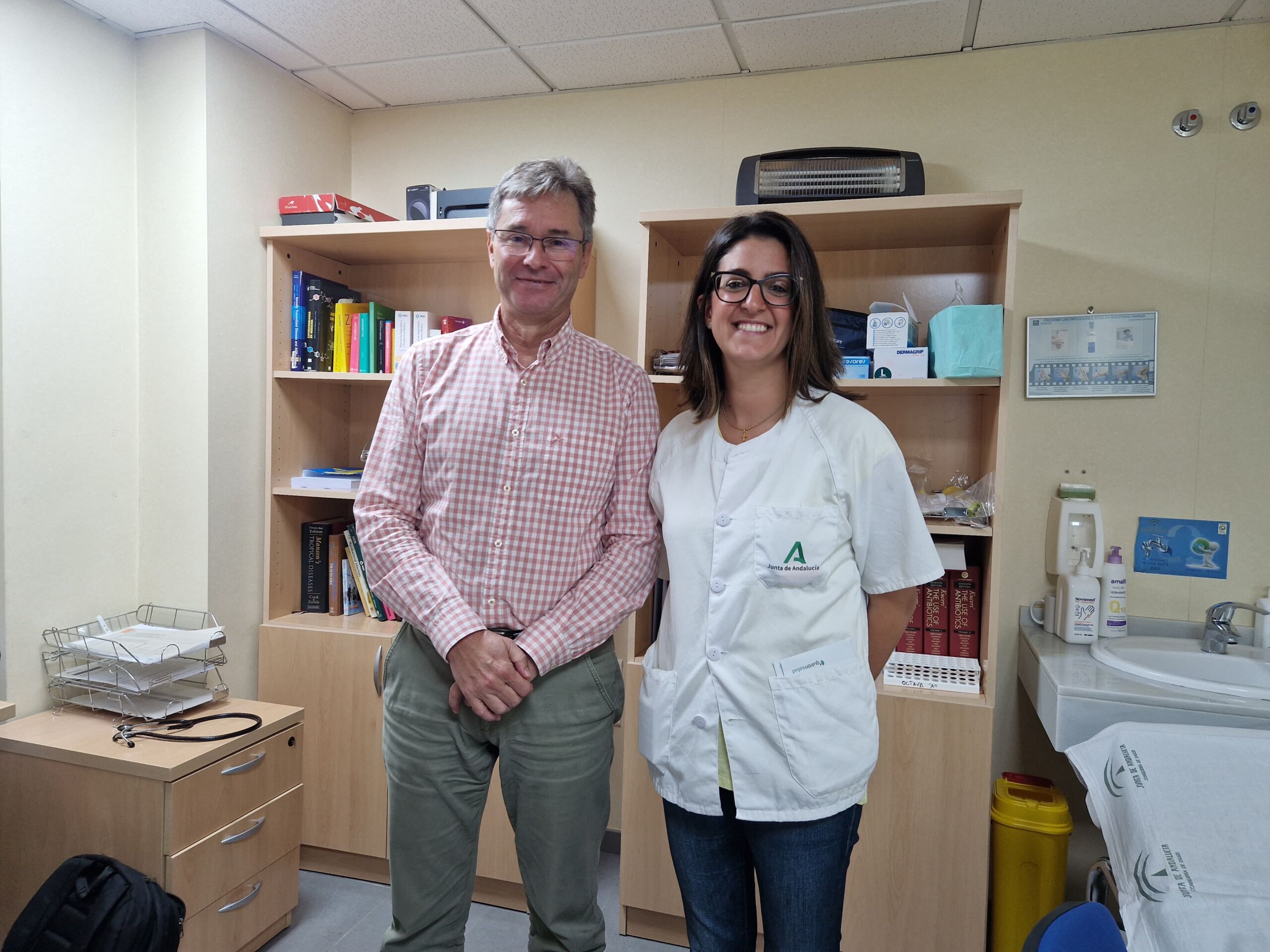
Dr. Jesús Rodríguez Baño and Dr. Zaira Palacios Baena.
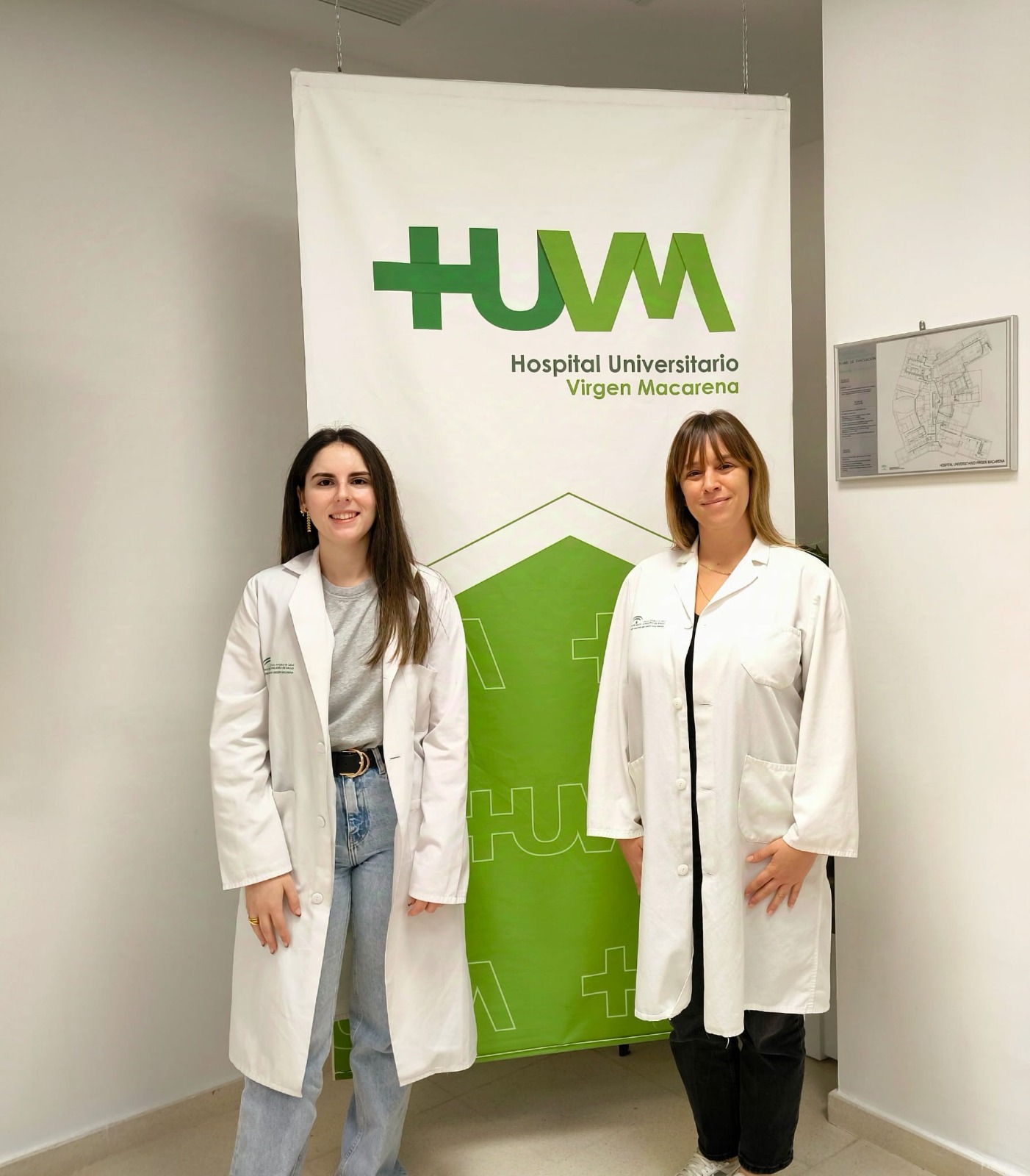
The researchers Paula Olivares Navarro and Giulia Caponcello.
Hospital Universitario Virgen Macarena participates in the closing meeting of the international project ‘ORCHESTRA’ to tackle COVID-19
More than 7,000 patients from 50 European centres have participated in this research.
37 scientists from 14 countries have met in the Italian city of Verona to finish to the ‘ORCHESTRA’ research project, funded by the European Commission’s Horizon 2020 programme, which will end next November. The project, coordinated by the Infectious Diseases Unit of the University of Verona, was born in 2020 with the aim of offering an innovative approach to learn from the SARS-CoV-2 health crisis and generate recommendations to strengthen preparedness for future outbreaks.
More than 7,000 patients with COVID-19 from 50 European centres have participated in the project, thus making it possible to accurately trace the link between the virus variants and the specific clinical conditions of each patient. During the four years of research work, the European project has achieved innovative results in the fight against persistent COVID, such as the location of four different clinical subtypes in addition to the definition of the characteristics of patients at risk of developing it. The results of this research have also shown that both vaccines and monoclonal antibodies are effective in reducing the risk of progression to severe forms of the disease by more than 80%, also controlling the risk of resistance to these therapies, especially in vulnerable patients with onco-hematological pathologies and solid organ transplant recipients.
The close collaboration between different entities has led to the creation of ‘The ORCHESTRA Data Portal’, a data portal open to the international scientific community that brings together all the results and knowledge developed from the contribution of all the centres involved in the project.
ORCHESTRA has also had a great impact both among the scientific community and the general public, generating more than 100 scientific publications and numerous educational videos. It has thus been demonstrated that scientific research can not only keep the population well informed, but also offer a decisive and timely contribution during a health emergency, supporting health professionals in their daily work and providing solutions for the future.
The Hospital Universitario Virgen Macarena, through the research group coordinated by the doctors of the Infectious Diseases Service Jesús Rodríguez Baño and Zaira Palacios Baena, and also includes researchers Paula Olivares Navarro and Giulia Caponcello (among other professionals of the service, nursing staff and biobank), has participated in the ‘ORCHESTRA’ project by co-leading work package 4 (COVID-19 in fragile patients) and actively participating in work package 2 (effect of vaccination in different groups of patients).
The project has the collaboration of the Fundación para la Gestión de la Investigación en Salud de Sevilla (FISEVI), an entity that also collaborates with the Infectious Diseases Service of the Hospital Universitario Virgen Macarena in more than a dozen projects and clinical trials, both European and national.
Dr. Jesús Rodríguez Baño and Dr. Zaira Palacios Baena.
The researchers Paula Olivares Navarro and Giulia Caponcello.
Publicado el: 24/10/2024
Compartir en:
