

News
News
Published on 12/02/2026
Andalusia is participating in the ESOR project to improve the oral health of older people.
Share on:
- The European project promotes equal access to healthcare between urban and rural areas in south-west Europe and is structured around three lines of action: literacy and knowledge; telemedicine, identification and care; and public health strategy.
The Andalusian institutions Fundación Pública Andaluza para la Investigación Biosanitaria de Andalucía Oriental–Alejandro Otero (FIBAO) and the Fundación para la Gestión de la Investigación en Salud de Sevilla (FISEVI) took part this week in the kick-off meeting of the European project Evaluation of Oral Health in Rural Areas (ESOR). The project aims to improve oral health among older people and individuals with chronic conditions in remote areas, particularly rural regions, in south-west Europe. The initiative focuses on France (Occitanie), Portugal (Alentejo) and Spain (Andalusia, Murcia and Valencia).
This project addresses unequal access to oral healthcare, a persistent issue in Europe, where oral diseases affect 466 million people. The problem is particularly acute in rural areas due to the low density of professionals and the fact that in some locations care is predominantly private, limiting access for vulnerable populations.
Through ESOR, the partners aim to promote social cohesion, ensure equal access to healthcare and reduce inequalities in oral health between urban and rural areas, thereby improving overall health and quality of life for the target populations. The project also seeks to strengthen the resilience of health systems through social innovation, supporting a transition towards family- and community-based care.
The principal investigator for FIBAO in this project is Mercedes Pérez Heredia, a Primary Care dentist in the Poniente Health District of Almería and a member of the ICuSa Health Care Research Group at the University of Almería. Her work within the project, together with other collaborating professionals from FIBAO, including Irina Sacchi Orloff and Antonio Expósito Delgado, Primary Care dentists in the provinces of Granada and Jaén respectively, focuses on all three actions, but particularly on the third strand, ‘Public Health Strategy’. They also lead the project’s communication strategy, a key component for the success of ESOR. Beyond disseminating results, communication helps to highlight the project’s impact in rural communities and to strengthen transnational cooperation.
The principal investigator for FISEVI is Alfonso García Palma, Coordinator of the Comprehensive Oral Health Plan for Andalusia and Director of the Aljarafe-Sevilla Norte Oral Health Clinical Management Unit within the Andalusian Health Service. His role in the project focuses on implementation and patient recruitment, as well as on analysing tele-dentistry (tele-oral care) within the Andalusian Public Health System (SSPA).
FIBAO and FISEVI represent Andalusia in this project, which is coordinated by the Centre Hospitalier Universitaire de Montpellier. Other participating institutions include the Universitat de València (OPiCOBE), the Health Research Institute INCLIVA, the University of Murcia and the University of Lisbon (Faculty of Dental Medicine).
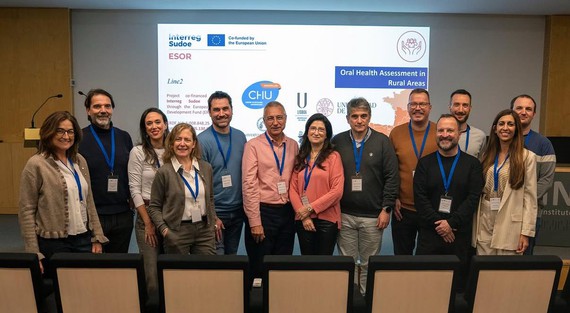
The ESOR kick-off meeting brought together all consortium partners to officially launch the project, share objectives and coordinate the first activities within each working group. The two-day meeting included several scientific and organisational sessions focusing on literacy and knowledge, communication and dissemination, digital health identification, interventions, policy and financial management.
ESOR, which will run for three years, is a European initiative funded by the European Regional Development Fund (ERDF) through the Interreg Programme (European Cohesion Policy) SUDOE, with a total budget of €1,345,131.
Three lines of action based on telemedicine and professional skills
The project is structured around three interconnected lines of action, based on the application of telemedicine and the enhancement of professional skills: Literacy and knowledge; Identification and care; and Public health strategy.
The first strand – Literacy and knowledge – focuses on improving oral health knowledge in the SUDOE region, building on work carried out under the JAPrevent NCD & Cancer programme funded by the European Commission, which includes a planned pilot project on oral health. It also aims to enhance the skills and knowledge in oral healthcare of professionals in contact with the target populations where they live, work and/or travel, using the educational materials developed under the ERASMUS+ project ‘Oral Health’.
The second strand – Identification and care – includes the identification of at-risk or frail individuals using the World Health Organization (WHO) Integrated Care for Older People tool (ICOPE), to which an oral health parameter will be added; the remote diagnosis of oral pathologies in individuals identified as frail, using the e-DENT oral telemedicine system (developed in Montpellier); and the promotion of a tele-assistance system enabling local healthcare professionals to carry out care procedures with remote support from an oral health professional.
The third strand – Public health strategy – aims to enhance the skills of local healthcare professionals so that they take on a more active role in oral healthcare; to optimise care and accelerate care pathways in line with WHO recommendations on new professional organisation models; and to develop health policy recommendations based on the project’s experience and scientific evidence.
The implementation of these actions in the SUDOE region will require adaptation to three different healthcare systems – France, Portugal and Spain – and a common methodology will therefore be proposed that can also be replicated in other European countries to combat the burden of oral diseases worldwide.
More information about the project is available via this link.
Andalusia is participating in the ESOR project to improve the oral health of older people.
- The European project promotes equal access to healthcare between urban and rural areas in south-west Europe and is structured around three lines of action: literacy and knowledge; telemedicine, identification and care; and public health strategy.
The Andalusian institutions Fundación Pública Andaluza para la Investigación Biosanitaria de Andalucía Oriental–Alejandro Otero (FIBAO) and the Fundación para la Gestión de la Investigación en Salud de Sevilla (FISEVI) took part this week in the kick-off meeting of the European project Evaluation of Oral Health in Rural Areas (ESOR). The project aims to improve oral health among older people and individuals with chronic conditions in remote areas, particularly rural regions, in south-west Europe. The initiative focuses on France (Occitanie), Portugal (Alentejo) and Spain (Andalusia, Murcia and Valencia).
This project addresses unequal access to oral healthcare, a persistent issue in Europe, where oral diseases affect 466 million people. The problem is particularly acute in rural areas due to the low density of professionals and the fact that in some locations care is predominantly private, limiting access for vulnerable populations.
Through ESOR, the partners aim to promote social cohesion, ensure equal access to healthcare and reduce inequalities in oral health between urban and rural areas, thereby improving overall health and quality of life for the target populations. The project also seeks to strengthen the resilience of health systems through social innovation, supporting a transition towards family- and community-based care.
The principal investigator for FIBAO in this project is Mercedes Pérez Heredia, a Primary Care dentist in the Poniente Health District of Almería and a member of the ICuSa Health Care Research Group at the University of Almería. Her work within the project, together with other collaborating professionals from FIBAO, including Irina Sacchi Orloff and Antonio Expósito Delgado, Primary Care dentists in the provinces of Granada and Jaén respectively, focuses on all three actions, but particularly on the third strand, ‘Public Health Strategy’. They also lead the project’s communication strategy, a key component for the success of ESOR. Beyond disseminating results, communication helps to highlight the project’s impact in rural communities and to strengthen transnational cooperation.
The principal investigator for FISEVI is Alfonso García Palma, Coordinator of the Comprehensive Oral Health Plan for Andalusia and Director of the Aljarafe-Sevilla Norte Oral Health Clinical Management Unit within the Andalusian Health Service. His role in the project focuses on implementation and patient recruitment, as well as on analysing tele-dentistry (tele-oral care) within the Andalusian Public Health System (SSPA).
FIBAO and FISEVI represent Andalusia in this project, which is coordinated by the Centre Hospitalier Universitaire de Montpellier. Other participating institutions include the Universitat de València (OPiCOBE), the Health Research Institute INCLIVA, the University of Murcia and the University of Lisbon (Faculty of Dental Medicine).
The ESOR kick-off meeting brought together all consortium partners to officially launch the project, share objectives and coordinate the first activities within each working group. The two-day meeting included several scientific and organisational sessions focusing on literacy and knowledge, communication and dissemination, digital health identification, interventions, policy and financial management.
ESOR, which will run for three years, is a European initiative funded by the European Regional Development Fund (ERDF) through the Interreg Programme (European Cohesion Policy) SUDOE, with a total budget of €1,345,131.
Three lines of action based on telemedicine and professional skills
The project is structured around three interconnected lines of action, based on the application of telemedicine and the enhancement of professional skills: Literacy and knowledge; Identification and care; and Public health strategy.
The first strand – Literacy and knowledge – focuses on improving oral health knowledge in the SUDOE region, building on work carried out under the JAPrevent NCD & Cancer programme funded by the European Commission, which includes a planned pilot project on oral health. It also aims to enhance the skills and knowledge in oral healthcare of professionals in contact with the target populations where they live, work and/or travel, using the educational materials developed under the ERASMUS+ project ‘Oral Health’.
The second strand – Identification and care – includes the identification of at-risk or frail individuals using the World Health Organization (WHO) Integrated Care for Older People tool (ICOPE), to which an oral health parameter will be added; the remote diagnosis of oral pathologies in individuals identified as frail, using the e-DENT oral telemedicine system (developed in Montpellier); and the promotion of a tele-assistance system enabling local healthcare professionals to carry out care procedures with remote support from an oral health professional.
The third strand – Public health strategy – aims to enhance the skills of local healthcare professionals so that they take on a more active role in oral healthcare; to optimise care and accelerate care pathways in line with WHO recommendations on new professional organisation models; and to develop health policy recommendations based on the project’s experience and scientific evidence.
The implementation of these actions in the SUDOE region will require adaptation to three different healthcare systems – France, Portugal and Spain – and a common methodology will therefore be proposed that can also be replicated in other European countries to combat the burden of oral diseases worldwide.
More information about the project is available via this link.
Publicado el: 12/02/2026
Compartir en:
